
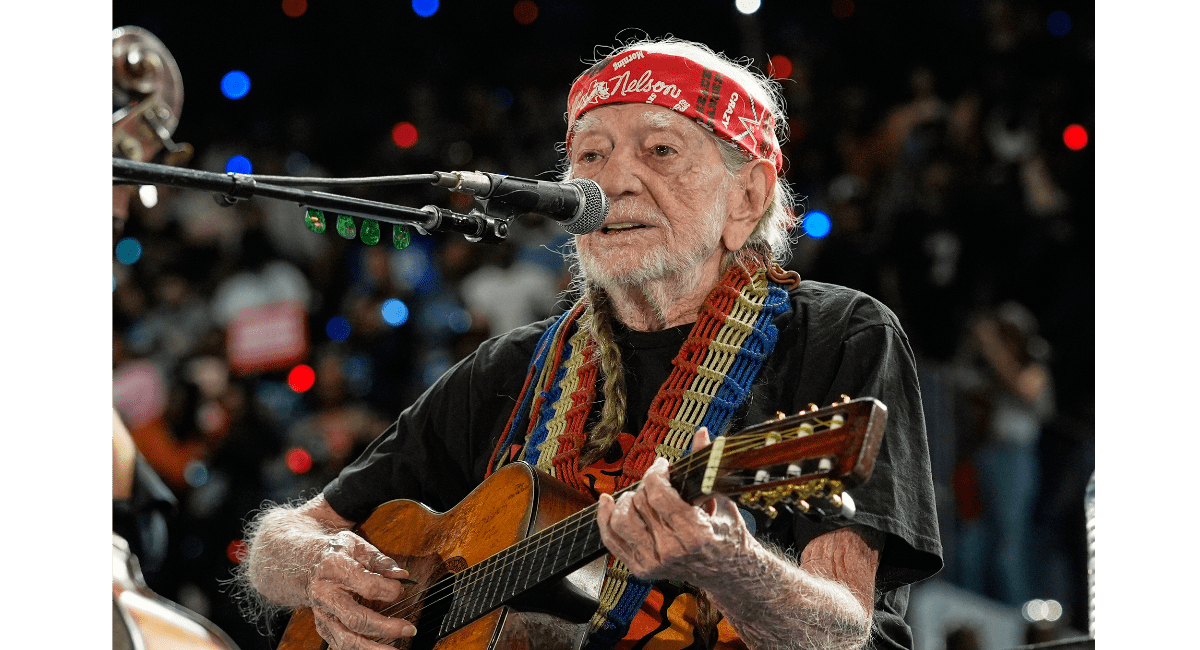
Willie Nelson age continues to amaze fans worldwide as the country music legend celebrates being 92 years young in 2026, showing no signs of slowing down his touring schedule or creative output.
Born on April 29, 1933, in the small town of Abbott, Texas, Willie has defied all expectations about aging, continuing to perform over 100 shows annually and releasing his 77th studio album while most people his age have long retired.
His remarkable longevity, combined with six decades of groundbreaking music that helped create the outlaw country movement, makes him one of the most enduring and beloved figures in American entertainment history.
Table of Contents
Quick Facts About Willie Nelson
| Category | Details |
|---|---|
| Full Name | Willie Hugh Nelson |
| Date of Birth | April 29, 1933 (also celebrates April 30) |
| Age (2026) | 92 years old |
| Birthplace | Abbott, Texas, USA |
| Current Residence | Spicewood, Texas & Maui, Hawaii |
| Height | 5 feet 6 inches (168 cm) |
| Nationality | American |
| Profession | Singer-songwriter, Musician, Actor, Author, Activist |
| Genres | Country, Outlaw Country, Folk, Jazz, Blues |
| Instrument | Guitar (Martin N-20 “Trigger”) |
| Years Active | 1956 – Present (69 years) |
| Current Wife | Annie D’Angelo (married 1991) |
| Number of Marriages | 4 |
| Children | 8 (Lana, Susie, Billy, Paula, Amy, Lukas, Micah, Renee) |
| Net Worth (2025) | $25 million |
| Grammy Awards | 12 wins, 52 nominations |
| Studio Albums | 77+ (as of 2025) |
| Famous Songs | “On the Road Again,” “Blue Eyes Crying in the Rain,” “Always on My Mind” |
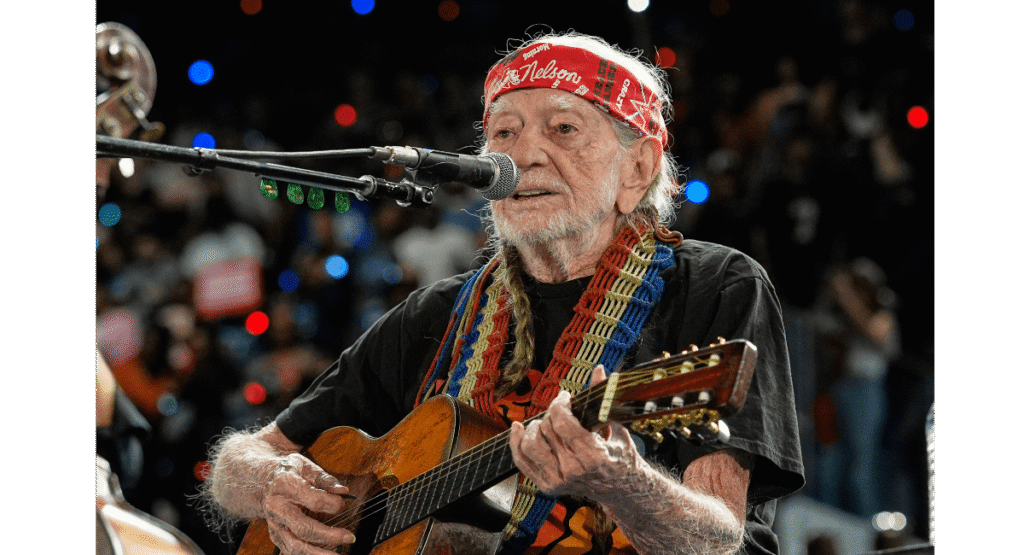
| Signature Feature | Long braids, bandana, worn guitar |
| Business Ventures | Willie’s Reserve (cannabis), biodiesel, golf course |
Willie Nelson Age: 92 Years Young in 2025
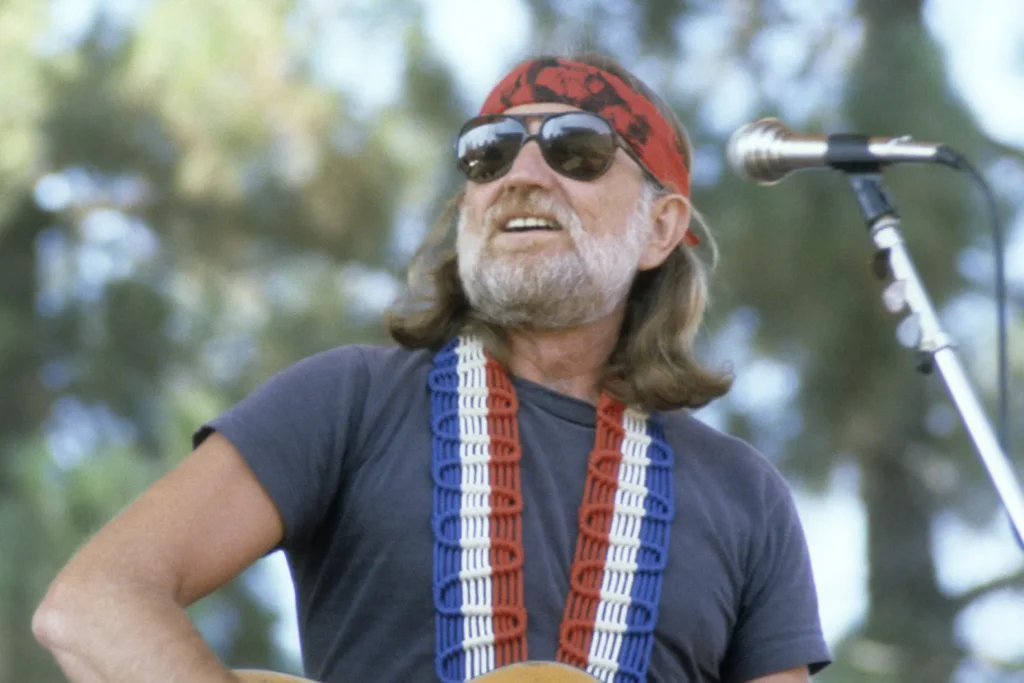
At 92 years old in 2025, Willie Nelson stands as living proof that age is just a number when you’re passionate about what you do. While most nonagenarians have settled into quiet retirement, Willie continues touring extensively, recording new music, and maintaining a schedule that would exhaust people half his age.
His vitality and creative energy defy conventional expectations about aging, making him an inspiration not just to music fans but to anyone who believes life’s later chapters can be as productive and meaningful as the earlier ones.
Born April 29, 1933 in Abbott, Texas
Willie Hugh Nelson was born on April 29, 1933, in Abbott, Texas, a tiny farming community about 60 miles south of Dallas with a population that barely exceeded 300 people. His birth occurred during the depths of the Great Depression, a time when rural America faced extraordinary economic hardship and uncertainty.
Abbott’s small-town atmosphere and agricultural roots would profoundly influence Willie’s music, giving him authentic connection to the working-class struggles and simple pleasures that characterize much of his songwriting throughout his career.
The exact circumstances of Willie’s birth have become part of his legend, with the family home being a modest structure that reflected the poverty many rural Texans endured during this era. His parents, Ira Doyle Nelson and Myrle Marie Greenhaw, were young and struggling to establish themselves during economically devastating times.
The challenges they faced would soon lead to decisions that dramatically shaped Willie’s childhood and early development, setting him on a path quite different from what a traditional two-parent household might have provided.
Abbott, Texas, remains significant in Willie’s identity and mythology even today. The small town appears frequently in his songs, interviews, and autobiographical writings as the place that formed his character, values, and musical sensibilities.
He has maintained connections to Abbott throughout his life, occasionally performing there and supporting community initiatives. The town has embraced its famous son, with local landmarks and annual celebrations honoring Willie’s contributions to music and his roots in their community.
Being born in 1933 means Willie has lived through nearly a century of American history, experiencing firsthand the Great Depression, World War II, the post-war boom, the cultural revolution of the 1960s, and every major social and technological change since.
This perspective gives depth and authenticity to his music that connects with multiple generations. His songs reflect not just personal experiences but collective American experiences spanning nearly 100 years, making his work culturally and historically significant beyond just entertainment value.
The Two Birthday Mystery
One of the quirky facts about Willie Nelson age is that he celebrates two birthdays—April 29 and April 30—creating confusion among fans and trivia enthusiasts about his actual birth date. This unusual situation stems from discrepancies in official records, with different documents listing different dates.
Willie himself has acknowledged this confusion, sometimes joking that celebrating two birthdays means he gets twice as many birthday wishes and presents, which suits him just fine.
The origin of this two-birthday situation traces back to birth certificate records and family documentation that apparently conflicted. In rural Texas in 1933, record-keeping wasn’t as precise or standardized as it would later become, and births occurring at home rather than hospitals often had documentation completed days or even weeks after the actual event.
Memories could be fuzzy, dates could be confused, and administrative errors could creep into official records without being corrected for decades.
April 29 appears to be the date most commonly accepted as Willie’s actual birthday, appearing on most official documents and biographies. However, some early records listed April 30, and that date has persisted in certain contexts throughout his life.
Rather than definitively settling the matter or insisting on one date, Willie has embraced the ambiguity, using it as another example of his laid-back, don’t-sweat-the-small-stuff philosophy that characterizes his approach to life.
For fans and the music industry, Willie’s birthday season in late April has become an annual celebration regardless of the specific date. Tribute concerts, special releases, social media campaigns, and media coverage all mark the occasion when Willie adds another year to his remarkable life.
The fact that it might be April 29 or April 30 matters less than taking the opportunity to celebrate a living legend who continues enriching American culture well into his tenth decade.
Still Performing at 92
What truly distinguishes Willie Nelson at 92 isn’t just his age but his remarkable activity level and commitment to performing. In 2025, Willie continues maintaining a touring schedule that includes over 100 shows annually, performing across the United States and occasionally internationally.
His Outlaw Music Festival, which he headlines along with other country and Americana artists, has become a summer touring tradition that draws tens of thousands of fans eager to see the legend perform his classic hits and newer material.
Willie’s performances at 92 demonstrate both his enduring vocal abilities and his masterful guitar playing. While his voice has naturally aged and deepened over the decades, becoming more weathered and textured, it retains the distinctive behind-the-beat phrasing and emotional delivery that made him famous.
He adapts song arrangements to suit his current vocal range, sometimes lowering keys or modifying melodies, but the essential Willie Nelson sound remains intact and immediately recognizable to audiences worldwide.
His stage presence at 92 reflects wisdom and experience accumulated over seven decades of performing. Willie doesn’t move around much on stage anymore, typically sitting on a stool with his guitar “Trigger,” but his musical communication and connection with audiences remain powerful.
He intersperses songs with brief stories and humor, creating intimate atmosphere even in large venues. His band, featuring longtime collaborators and his sons Lukas and Micah, provides support while giving Willie space to shine as the central figure everyone came to see.
The physical and mental demands of maintaining such an active touring schedule at 92 are extraordinary. Travel, time zone changes, late nights, and the energy required for performances would challenge people decades younger.
That Willie continues choosing this lifestyle rather than retiring to a quiet life on his Texas ranch or Hawaiian home demonstrates his genuine passion for music and connection with fans. For Willie, performing isn’t just a career or income source—it’s fundamental to his identity and purpose, keeping him vital and engaged with life.
Recent shows have sometimes included modifications to accommodate Willie’s age, including shorter set lengths, more frequent breaks, or additional support from family members and band mates.
However, these adaptations don’t diminish the essential experience of seeing Willie Nelson perform live. Fans attending his concerts in 2025 understand they’re witnessing history—a living legend who has outlasted virtually all his contemporaries while maintaining his artistic integrity and creative vitality.
Health and Longevity Secrets
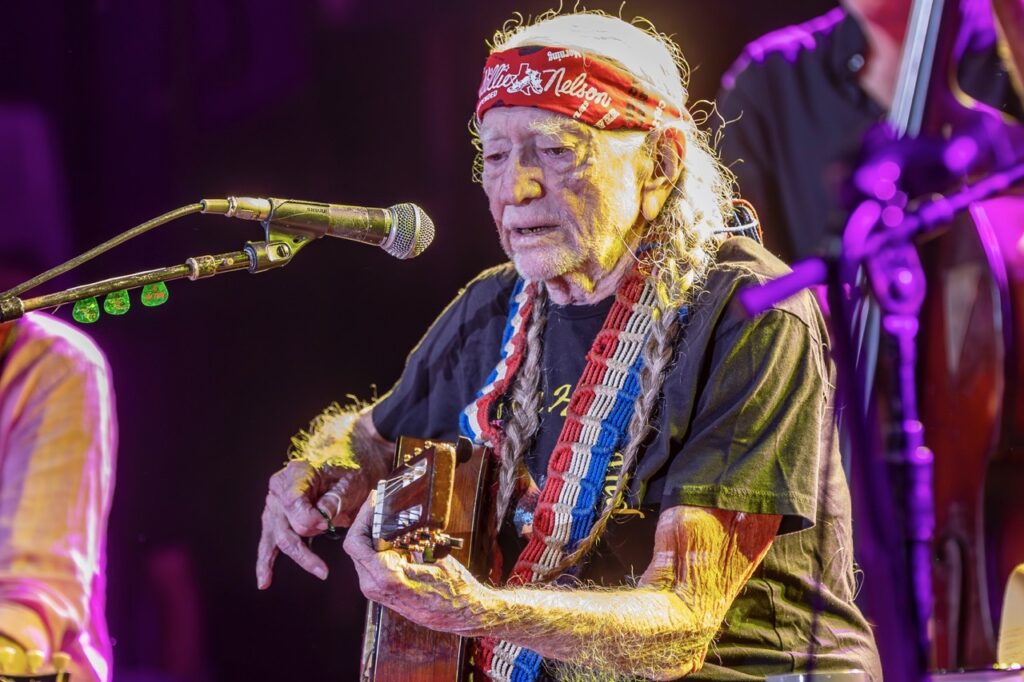
Willie Nelson’s remarkable health and longevity at 92 has sparked considerable interest in his lifestyle choices, daily habits, and the factors contributing to his continued vitality.
While genetics certainly play a role, Willie’s approach to life includes specific practices and attitudes that have helped him thrive into his tenth decade while maintaining an active career that would exhaust most people half his age.
- Cannabis Use: Perhaps most famously, Willie has long advocated for and used marijuana, which he credits with various health benefits including pain management, stress relief, and overall wellness. While controversial in earlier decades, Willie’s cannabis use has been vindicated by changing social attitudes and growing medical research supporting various therapeutic applications. He has stated that replacing alcohol with cannabis improved his health significantly, and his Willie’s Reserve brand reflects his commitment to quality, responsible cannabis consumption.
- Regular Exercise: Despite his age, Willie maintains regular exercise routines including swimming, martial arts practice, and walking. He has studied and practiced kung fu for decades, crediting the discipline and physical activity with maintaining flexibility, balance, and overall fitness. His exercise approach isn’t extreme or punishing but consistent and sustainable, focusing on activities he enjoys rather than forcing himself through workouts he dreads.
- Positive Mental Attitude: Willie’s philosophy emphasizes staying positive, avoiding stress, and not dwelling on negativity. His Buddhist-influenced worldview helps him maintain equanimity amid life’s ups and downs. He frequently discusses the importance of accepting what you cannot change, focusing on what brings joy, and not letting anger or resentment poison your life. This mental approach likely contributes as much to his longevity as any physical practice.
- Staying Active and Engaged: Rather than retiring and becoming sedentary, Willie has maintained busy schedule filled with music, business interests, activism, and family involvement. Research consistently shows that people who remain active and engaged tend to live longer, healthier lives than those who withdraw into passive retirement. Willie’s continued touring, recording, and business activities keep his mind sharp and give him reasons to get up each morning.
- Strong Social Connections: Willie maintains close relationships with family, bandmates, longtime friends, and his vast network within the music industry. His marriage to Annie D’Angelo provides stable, supportive partnership. His children, particularly sons Lukas and Micah, work closely with him professionally. These connections provide emotional support, purpose, and the social engagement that research shows is crucial for healthy aging.
- Adaptability: Willie has shown remarkable ability to adapt to changing circumstances, whether adjusting his voice to accommodate aging, modifying tour schedules as needed, or accepting that he can’t do everything he once could. This flexibility prevents the frustration and resistance that often accompanies aging, allowing him to continue doing what he loves while making necessary accommodations.
Early Life and Musical Beginnings
Willie Nelson’s journey from poverty-stricken Depression-era Texas to becoming an American icon began with circumstances that could have derailed many people but instead forged the resilience, creativity, and authenticity that would define his character and music.
His early life experiences provided both the hardships that gave his music emotional depth and the musical foundation that would support six decades of creative output.
Childhood During the Great Depression
Willie’s childhood unfolded during America’s Great Depression, when economic collapse devastated rural communities like Abbott, Texas. The agricultural economy that sustained small Texas towns had crashed, leaving families struggling to afford basic necessities.
For the Nelson family, these circumstances were particularly challenging, creating instability that would significantly impact young Willie’s upbringing and family structure.
The poverty Willie experienced wasn’t abstract—it was daily reality of insufficient food, inadequate clothing, and constant uncertainty about meeting basic needs. Rural Texas in the 1930s lacked many modern conveniences, with families drawing water from wells, using outhouses, and living without electricity or running water.
These conditions, while common for the era and region, created hardships that Willie would remember and reference throughout his life and career.
Despite material poverty, Abbott’s community maintained rich cultural life centered on church, school, and music. Gospel singing in church services, community gatherings with music and dancing, and family musical traditions provided entertainment and emotional sustenance that didn’t require money.
This cultural environment introduced Willie to music not as commercial product but as essential human expression—a perspective that would profoundly influence his artistic approach throughout his career.
The Depression-era values Willie absorbed—thriftiness, self-reliance, distrust of institutions, and solidarity with struggling people—would resurface repeatedly in his music and activism.
His later work with Farm Aid, supporting family farmers facing economic hardship, directly connected to his childhood memories of rural poverty and agricultural struggle. The empathy and authenticity in his music comes partly from genuine understanding of hardship rather than romanticized or secondhand knowledge.
Raised by Grandparents
A defining aspect of Willie’s childhood was being raised primarily by his paternal grandparents, William and Nancy Nelson, after his parents’ marriage failed and his mother left when Willie was very young. His father remarried and started a new family, leaving Willie and his sister Bobbie in their grandparents’ care.
This abandonment could have been traumatic, but Willie’s grandparents provided stable, loving home that emphasized music, education, and strong values.
Nancy and William Nelson were devout people who ensured Willie and Bobbie attended church regularly and participated in musical activities. Nancy played piano, and the household was filled with gospel music, hymns, and the musical traditions of rural Texas.
This immersion in music from earliest childhood gave Willie foundation that would support his entire career. Rather than starting music lessons as optional activity, music was woven into the fabric of daily life in the Nelson household.
Willie’s grandfather William worked various jobs to support the family, demonstrating work ethic and resilience that Willie would later emulate in his own career. The values his grandparents instilled—honesty, kindness, respect for others, and personal responsibility—remained with Willie throughout his life.
He has spoken fondly of his grandparents in numerous interviews and autobiographical writings, crediting them with providing stability and love during circumstances that could have left him adrift.
The relationship with his sister Bobbie, also raised by their grandparents, remained strong throughout both their lives. Bobbie became accomplished pianist and performed with Willie’s band for decades until her death in 2022 at age 91.
Their shared childhood experiences and musical upbringing created bond that lasted over 80 years, with Bobbie serving as musical partner, confidante, and connection to Willie’s earliest memories and foundations.
First Guitar at Age Six
Willie received his first guitar at age six from his grandfather, marking the beginning of what would become one of music’s most celebrated careers. The instrument wasn’t expensive or fancy—just a basic acoustic guitar suitable for a child—but it opened a world of possibility and self-expression that immediately captivated young Willie.
He took to the guitar naturally, spending hours practicing and experimenting with sounds, developing skills that would eventually make him one of the most distinctive guitarists in country music.
His grandfather not only gave him the guitar but also arranged for local music teacher to provide lessons, recognizing Willie’s natural ability and passion for music. These early lessons taught Willie basic chords, technique, and music theory, though his later style would depart significantly from traditional teaching.
Even as a child, Willie began developing his distinctive approach—playing slightly behind the beat, using jazz-influenced chord progressions, and prioritizing feeling over technical perfection.
By age seven or eight, Willie was already performing publicly, playing at local gatherings, church events, and community functions. This early performance experience taught him how to connect with audiences, read their reactions, and adjust his playing to suit different contexts and crowds.
The confidence and stage presence he developed as a child performer would serve him well throughout his career, making him comfortable in front of audiences of any size.
The guitar became more than just an instrument for Willie—it was companion, emotional outlet, and means of expression when words failed. During the difficulties of his childhood, including processing his mother’s absence and navigating family complexities, the guitar provided solace and creative channel for emotions he might not have known how to verbalize.
This therapeutic relationship with music would continue throughout his life, with songwriting and performing serving as emotional processing and healing.
Early Musical Influences
Willie’s musical influences during his formative years were eclectic and wide-ranging, drawn from what he heard on radio, in church, and from traveling musicians who passed through Abbott. Gospel music from church services gave him foundation in harmony, emotion, and spiritual themes that would appear throughout his songwriting.
Country music pioneers like Ernest Tubb, Hank Williams, and Roy Acuff on radio broadcasts showed him country music’s commercial possibilities and artistic traditions.
Western swing, particularly Bob Wills and the Texas Playboys, profoundly influenced Willie’s musical development. Western swing’s combination of country, jazz, and pop elements with sophisticated arrangements and improvisational freedom resonated with Willie’s own musical instincts.
Bob Wills’s refusal to be confined by narrow genre definitions and his willingness to blend styles would become template for Willie’s later genre-defying approach to music.
Jazz musicians like Django Reinhardt influenced Willie’s guitar playing, introducing him to sophisticated chord voicings and melodic approaches beyond standard country guitar.
This jazz influence would become distinctive part of Willie’s sound, setting him apart from traditional country guitarists and allowing him to create music that transcended genre boundaries. His guitar solos often feature jazz-inspired phrasing and harmonies uncommon in country music.
Traditional folk music and blues also shaped Willie’s musical vocabulary, giving him connection to American roots music that predated commercial country. These influences taught him about storytelling through song, emotional authenticity, and the power of simple melodies with profound lyrics.
The combination of all these influences—gospel, country, western swing, jazz, folk, and blues—created unique musical foundation that would eventually produce Willie Nelson’s distinctive sound.
Willie Nelson’s Legendary Career
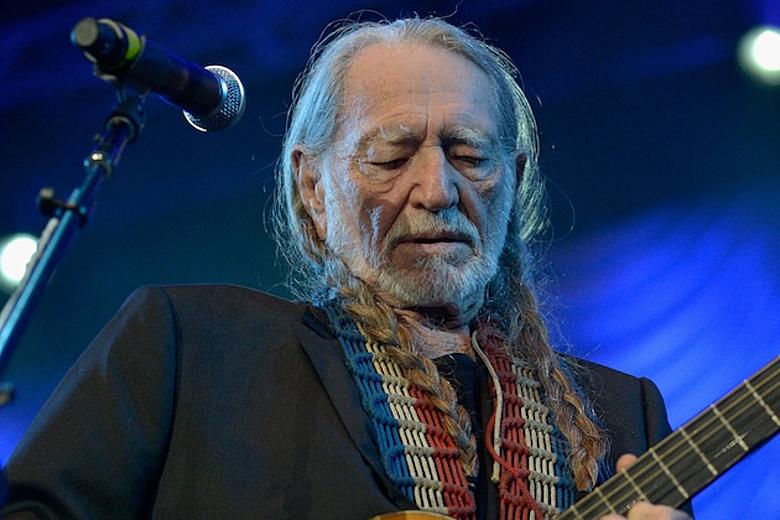
Willie Nelson’s career spans nearly seven decades, transforming from struggling songwriter to country music revolutionary to American cultural icon. His journey includes spectacular failures and remarkable triumphs, genre-defining innovations and commercial setbacks, financial disasters and creative renaissances.
Understanding his career arc reveals not just success story but testament to persistence, artistic integrity, and willingness to follow your vision even when the industry says you’re wrong.
Struggling Years in Nashville (1960s)
Willie moved to Nashville in 1960, hoping to establish himself as songwriter and recording artist in country music’s capital. The move initially seemed promising—he quickly sold “Family Bible” for $50 (a decision he would later regret when the song became a hit), and got songwriting contracts with publishing companies.
His songs “Crazy,” recorded by Patsy Cline, and “Hello Walls,” recorded by Faron Young, became major hits, establishing Willie as talented songwriter capable of crafting commercially successful material.
Despite his songwriting success, Willie struggled to establish himself as recording artist during his Nashville years. His vocal style—unconventional phrasing, jazz-influenced timing, and weathered tone—didn’t fit the polished Nashville Sound that dominated country music in the 1960s.
Producers tried to shape Willie into mainstream country star, adding string sections, background vocals, and slick production that buried his distinctive qualities under commercially calculated gloss.
The disconnect between Willie’s artistic vision and Nashville’s commercial demands created frustration that built throughout the 1960s. His albums received limited promotion, sold poorly, and failed to establish him as significant recording artist despite his obvious talent and proven songwriting ability.
The message from the industry was clear: Willie could write hit songs for other artists, but his own performance style was too unconventional for commercial success.
Financial pressures during these years were substantial. Despite writing hit songs, publishing deals and early contracts meant Willie wasn’t making as much money as the songs’ success might suggest.
He struggled with debt, family obligations from multiple marriages, and the expensive lifestyle of trying to maintain presence in Nashville’s competitive music scene. These financial stresses, combined with artistic frustration, contributed to personal problems including drinking and relationship difficulties.
By the end of the 1960s, Willie was deeply dissatisfied with Nashville. In December 1970, his house in Ridgetop, Tennessee, burned down—an event Willie has sometimes portrayed as both catastrophic and liberating.
The fire destroyed his possessions but also symbolically freed him from his failed Nashville dream. Shortly after, Willie moved back to Texas, a decision that would prove transformative for both his career and country music more broadly.
Birth of Outlaw Country (1970s)
Willie’s return to Texas in 1970, specifically to Austin, marked the beginning of what would become the outlaw country movement. Austin’s music scene in the early 1970s was diverse and open-minded, with hippies, college students, and traditional country fans mixing at venues like the Armadillo World Headquarters.
This environment welcomed Willie’s unconventional approach, allowing him to blend country, rock, folk, and jazz without conforming to Nashville’s commercial formulas.
The outlaw country movement rejected Nashville’s polished production values and strict genre boundaries in favor of artistic authenticity and creative control.
Willie, along with Waylon Jennings, Kris Kristofferson, and others, insisted on producing their own records, choosing their own material, and maintaining artistic integrity even if it meant sacrificing some commercial potential. This stance was revolutionary in an industry where producers and record executives traditionally controlled creative decisions.
Willie’s image transformed during this period. He grew his hair long, adopted his now-iconic braids, started wearing bandanas and casual clothes instead of country music’s traditional rhinestone suits, and embraced the hippie aesthetic that aligned him visually with Austin’s counterculture.
This image change wasn’t calculated marketing—it reflected Willie’s genuine values and comfort with Austin’s accepting, eclectic community. The authenticity resonated with audiences tired of country music’s increasingly conservative image.
The outlaw movement’s commercial breakthrough came with the 1976 compilation album “Wanted! The Outlaws,” featuring Willie, Waylon Jennings, Jessi Colter, and Tompall Glaser. The album became country music’s first certified platinum record, proving that artistic integrity and commercial success weren’t mutually exclusive.
This success validated Willie’s decade-long insistence that he should make music his way, and opened doors for other artists to challenge Nashville’s control.
Breakthrough Albums: Shotgun Willie to Stardust
Willie’s artistic breakthrough came with a series of albums in the 1970s that established his distinctive sound and commercial viability. “Shotgun Willie” (1973) was his first album recorded in Austin, featuring stripped-down production that let Willie’s voice and guitar shine.
Songs like the title track showcased his unique phrasing and the band’s loose, natural groove. While not a massive commercial hit, the album signaled Willie’s artistic rebirth and attracted critical praise.
“Red Headed Stranger” (1975) represented Willie’s full artistic vision—a concept album telling the story of a fugitive outlaw through sparse, haunting arrangements. Columbia Records executives reportedly hated the album, finding it too stripped-down and uncommercial compared to Nashville’s polished productions.
They wanted Willie to add strings and elaborate production, but he refused. When released, the album became a massive hit, eventually selling multiple million copies and spawning the number-one single “Blue Eyes Crying in the Rain.” The success proved Willie’s instincts correct and established him as major commercial force.
“Stardust” (1978) showcased Willie’s versatility by covering pop standards from the 1930s and 1940s—songs by Hoagy Carmichael, Irving Berlin, and others that had nothing to do with country music. Again, industry observers doubted the commercial potential, but Willie’s interpretations revealed these classics’ emotional core while demonstrating his ability to transcend genre boundaries.
The album spent ten years on the country charts, sold multiple million copies, and introduced Willie to audiences who might never have listened to country music.
These albums, along with others from this period like “Phases and Stages” (1974) and “Willie and Family Live” (1978), established Willie as artist who couldn’t be categorized or confined.
He was country music’s rebel who appealed to rock fans, a hippie-friendly outlaw embraced by traditional country audiences, a pop crooner who maintained credibility with purists. This broad appeal made him one of music’s most successful crossover artists.
The Highwaymen Era
In 1985, Willie joined forces with Johnny Cash, Waylon Jennings, and Kris Kristofferson to form The Highwaymen, a country music supergroup that became one of the most successful collaborative projects in the genre’s history.
The four legendary artists had been friends and mutual admirers for years, but The Highwaymen project gave them opportunity to tour and record together, combining their distinct styles and enormous fan bases.
The group’s debut album “Highwayman” (1985) featured the title track, which told the story of a soul experiencing multiple lives across history. The song became a number-one country hit and defined the group’s mythic, larger-than-life image.
The album sold platinum, and its success led to extensive touring where fans could see four legends perform both collaboratively and in individual segments showcasing each artist’s hits.
The Highwaymen released three studio albums—”Highwayman” (1985), “Highwayman 2” (1990), and “The Road Goes On Forever” (1995)—along with a live album. While critical reception varied, the commercial success was substantial, and the tours drew massive crowds eager to see these four icons together.
The project demonstrated country music’s elder statesmen could compete commercially with younger artists while maintaining artistic integrity and credibility.
Beyond commercial success, The Highwaymen represented brotherhood and mutual respect among artists who had each achieved legendary status independently. Their interactions on stage, filled with humor and obvious affection, showed audiences the genuine friendships behind the collaboration.
This authenticity—four friends making music together because they wanted to, not because they needed to commercially—resonated with fans and added to each member’s legacy.
Hit Songs That Defined Country Music
Willie Nelson’s catalog includes some of country music’s most enduring and widely recognized songs, many of which have transcended the genre to become part of America’s musical heritage. His songwriting combines deceptively simple melodies with emotionally complex lyrics, creating songs that feel both universal and deeply personal.
“Crazy,” written by Willie but made famous by Patsy Cline in 1961, remains one of the most recorded songs in country music history. Willie reportedly wrote the song in about 30 minutes, but its sophisticated melody and emotionally vulnerable lyrics created a standard that hundreds of artists have covered across multiple genres. Patsy Cline’s version showcased the song’s potential, but Willie’s own later recordings demonstrated his ability to inhabit the song from the writer’s perspective.
“On the Road Again” (1980) became Willie’s signature song and one of the most recognizable country songs worldwide. Written for the movie “Honeysuckle Rose,” the song captures Willie’s love of touring and the restless spirit that has kept him performing into his 90s. The upbeat melody and relatable lyrics about preferring life on tour to being home struck chord with musicians and traveling professionals, while its optimistic energy made it popular beyond country music.
“Always on My Mind” (1982) gave Willie one of his biggest crossover hits, reaching number five on the Billboard Hot 100 and winning three Grammy Awards. While the song had been recorded previously by other artists, Willie’s emotional interpretation—vulnerable, regretful, and deeply human—made it definitive version. The song’s themes of romantic regret and insufficient appreciation of loved ones resonated across demographics and generations.
“Blue Eyes Crying in the Rain” (1975) from “Red Headed Stranger” gave Willie his first number-one hit as a performer. The simple, haunting ballad showcased Willie’s ability to convey profound emotion through minimal means—just his voice, acoustic guitar, and heartbreaking melody. The song’s success proved that stripped-down, authentic performances could compete commercially with Nashville’s elaborate productions.
Other essential Willie Nelson songs include “Mammas Don’t Let Your Babies Grow Up to Be Cowboys” (duet with Waylon Jennings), “To All the Girls I’ve Loved Before” (duet with Julio Iglesias), “Georgia on My Mind,” “City of New Orleans,” and dozens more that have become standards. His ability to write, co-write, and interpret songs across styles—from traditional country to jazz standards to pop ballads—demonstrates musical versatility rare in any genre.
Acting Career and Film Appearances
Beyond music, Willie has maintained parallel career as actor, appearing in over 30 films and television shows since the late 1970s. While never achieving movie star status comparable to his music fame, Willie’s acting career demonstrates his versatility and willingness to explore creative outlets beyond songwriting and performing.
His natural charisma and authentic screen presence made him effective in roles that played to his strengths—usually portraying musicians, outlaws, or folksy wisdom figures.
His first significant film role came in “The Electric Horseman” (1979) alongside Robert Redford and Jane Fonda. Though his part was relatively small, working with Hollywood stars on a major production gave Willie credibility as actor and opened doors for future roles.
The experience also resulted in the soundtrack single “My Heroes Have Always Been Cowboys,” which became another hit song for Willie.
“Honeysuckle Rose” (1980) featured Willie in his first starring role, playing a country singer dealing with the conflicts between career and family life—a role that closely mirrored his own experiences.
The film’s soundtrack included “On the Road Again,” which became one of Willie’s biggest hits. While the movie received mixed reviews, it showcased Willie’s ability to carry a film and demonstrated that his authenticity translated effectively to screen.
“Barbarosa” (1982) gave Willie opportunity to stretch dramatically, playing an outlaw in a Western that received critical praise for its unconventional approach to the genre. Willie’s performance was surprisingly nuanced, showing acting ability beyond simply playing versions of himself. The role demonstrated that Willie could handle more complex characters and different genres beyond music-focused films.
Throughout the 1980s and beyond, Willie appeared in various films including “Songwriter” (1984), which earned him an Academy Award nomination for Best Original Song Score, “Red Headed Stranger” (1986) based on his album, and numerous TV movies and guest appearances. While few of these projects achieved major commercial or critical success, they kept Willie visible in multiple entertainment media and introduced his personality and music to audiences who might not have encountered him otherwise.
Willie Nelson’s Marriages and Love Life
Willie Nelson’s romantic history includes four marriages, numerous relationships, and the evolution from serial monogamist struggling with commitment to devoted husband maintaining 33+ year marriage to his fourth wife, Annie D’Angelo.
His relationship history reveals patterns of youthful impulsiveness, career-driven neglect, and eventual maturity that came with age and self-awareness. Understanding Willie’s marriages provides insight into his personal growth and the human vulnerabilities behind the legend.
First Marriage: Martha Matthews (1952-1962)
Willie married Martha Matthews in 1952 when he was just 19 years old, beginning a tumultuous relationship that would last a decade and produce three children. Martha and Willie met when both were young, and their early relationship had the passionate intensity typical of teenage romance.
However, the reality of young marriage during difficult economic times quickly revealed incompatibilities and challenges that neither was mature enough to navigate successfully.
The marriage was marked by financial struggle, with Willie working various jobs trying to support his growing family while pursuing musical ambitions that generated little income.
Martha resented the time and resources Willie devoted to music when they could barely afford necessities, creating fundamental conflict between Willie’s artistic dreams and practical family responsibilities. This tension only intensified as Willie’s commitment to music never wavered despite continued financial failure.
Arguments between Willie and Martha reportedly became physical on occasions, with both parties engaging in behavior they would later regret.
Stories from this period, shared by Willie in his autobiography and other sources, paint picture of volatile relationship marked by jealousy, infidelity, drinking, and mutual inability to communicate or compromise effectively. While some details remain private, Willie has acknowledged the relationship was unhealthy for everyone involved.
Three children were born during this marriage: Lana, Susie, and Billy (Willie Hugh Jr.). Despite the marital problems, Willie loved his children and tried to maintain relationships with them, though his career ambitions and touring meant he was frequently absent.
This pattern of physical absence from his children’s lives—a regret Willie has expressed in interviews—would repeat through multiple marriages as his career demands increased.
The marriage finally ended in 1962, with Willie acknowledging that neither he nor Martha was happy and that continuing the relationship served no one’s interests. While the divorce was painful and complicated by custody and financial arrangements, it freed both parties to pursue different paths.
Willie’s first marriage taught him lessons about compatibility, communication, and the challenges of balancing career ambitions with family responsibilities, though he would repeat some mistakes in subsequent relationships before fully learning these lessons.
Second Marriage: Shirley Collie (1963-1971)
Willie married Shirley Collie Nelson in 1963, less than a year after his divorce from Martha. Shirley was singer-songwriter Willie met through the music business, and unlike Martha, she understood and shared his commitment to musical career.
Their relationship initially seemed like better fit, with both partners understanding the demands and lifestyle of professional musicians. However, new set of challenges would ultimately doom this marriage as well.
Shirley and Willie collaborated musically, recording duets and performing together occasionally. This professional partnership meant Shirley was less likely to resent Willie’s career focus, since music was central to her identity as well.
For a time, this shared passion for music seemed like foundation for successful marriage that Willie’s first lacked. They understood each other’s artistic temperaments and the sacrifices necessary for musical careers.
However, Willie’s frequent touring and time away from home created opportunities for infidelity that Willie apparently took. The marriage suffered from Willie’s inability or unwillingness to remain faithful, with his relationships with other women while on tour creating betrayals that fundamentally damaged trust.
When Shirley discovered Willie had fathered a child (Paula Carlene) with another woman in 1969, the revelation destroyed whatever remained of the marriage.
The divorce in 1971 was complicated and painful, with Shirley reportedly feeling deeply betrayed not just by Willie’s infidelity but by the existence of a child he had fathered with someone else during their marriage.
The financial settlement was difficult given Willie’s precarious finances at the time, and the emotional aftermath left scars on both parties. Willie has spoken with regret about his behavior during this period, acknowledging his immaturity and selfishness.
Third Marriage: Connie Koepke (1971-1988)
Willie married Connie Koepke in 1971, shortly after his divorce from Shirley became final. Connie was significantly younger than Willie, and their relationship had begun while Willie was still married to Shirley—in fact, Connie was the woman with whom Willie had fathered Paula, the child whose existence led to his second divorce. This beginning perhaps foreshadowed some of the challenges this marriage would face.
Connie and Willie’s marriage lasted 17 years, longer than his previous two marriages combined, and produced two daughters: Paula (from before the marriage) and Amy Lee. During these years, Willie’s career finally achieved the success he had pursued for decades.
The move to Texas, the outlaw country movement, albums like “Red Headed Stranger” and “Stardust,” and Willie’s emergence as major star all occurred during his marriage to Connie.
However, success brought its own challenges to the relationship. Willie’s touring schedule intensified dramatically as he became major star, meaning even more time away from home than before. The temptations that come with fame—readily available romantic and sexual opportunities—tested Willie’s commitment.
Despite being older and more successful, Willie apparently continued patterns of infidelity that had damaged his previous marriages.
Connie managed various business aspects of Willie’s career during this period, taking on responsibilities beyond traditional spousal role. This involvement meant she had insider perspective on Willie’s professional life but also potentially blurred boundaries between business and personal relationship.
The dual roles of wife and business manager may have created tensions as career pressures intersected with marital dynamics.
The marriage ended in 1988, after nearly two decades together. While specific details of the divorce remain relatively private, Willie has indicated that by the end, both he and Connie recognized the relationship had run its course.
The divorce settlement was complicated by shared business interests and assets accumulated during Willie’s most commercially successful years. Despite the marriage ending, Willie maintained relationships with all his children from this marriage.
Fourth Marriage: Annie D’Angelo (1991-Present)
Willie married Annie D’Angelo on September 16, 1991, beginning what would become his longest and apparently happiest marriage. As of 2025, Willie and Annie have been married for 33+ years, demonstrating that Willie finally found the partnership and stability that eluded him in his previous three marriages.
Annie represents both Willie’s evolution as a partner and the benefits of marrying someone who complements rather than competes or conflicts with your personality and lifestyle.
Annie brought different perspective and temperament than Willie’s previous wives. As former makeup artist who had worked in entertainment but wasn’t seeking her own spotlight, Annie understood the industry without needing to be its center.
She was content supporting Willie’s career while maintaining her own interests and identity separate from his fame. This balance—being involved enough to be genuine partner but independent enough to avoid codependency—created healthier dynamic than Willie’s previous relationships.
Two sons were born from this marriage: Lukas Autry (born 1988, before the marriage) and Micah (born 1990). Both sons have followed their father into music, with Lukas leading the band Lukas Nelson & Promise of the Real and Micah pursuing his own musical projects.
Annie’s role as mother to these boys while also navigating Willie’s demanding career and his relationships with his older children from previous marriages required flexibility, patience, and strength.
What makes this marriage work when three previous attempts failed? Willie himself has suggested that he finally grew up enough to be good partner, learning from past mistakes about the importance of communication, respect, and commitment.
He was also older—58 when he married Annie—and perhaps more appreciative of stability and genuine partnership after decades of tumultuous relationships. Success and financial security removed some external stresses that plagued earlier marriages.
Annie has been credited with helping Willie through his IRS troubles in the early 1990s, providing emotional support and practical assistance during one of the most stressful periods of his life. She has managed various aspects of his business interests, including involvement with Willie’s Reserve cannabis brand.
Her business acumen and level-headed approach complement Willie’s more artistic temperament, creating partnership where both contribute according to their strengths.
How Willie Found Lasting Love at 58
Willie’s successful fourth marriage demonstrates that finding lasting love can happen at any age, even after multiple failures. At 58, Willie brought to his relationship with Annie the wisdom of age, the lessons of failed marriages, and perhaps most importantly, self-awareness about his own patterns and shortcomings.
He was also at a point in his career where he no longer felt he had something to prove, reducing the restless ambition that may have contributed to earlier relationship problems.
Meeting Annie while working on the film “Stagecoach” created different beginning than his previous relationships. Unlike his first marriage rooted in youthful impulsiveness, his second marriage to another musician that became professionally complicated, or his third marriage that began as affair, Willie’s relationship with Annie developed in more mature, deliberate context.
They had time to know each other before marriage, and both entered the relationship as adults with clear eyes about what partnership would require.
Willie has spoken about Annie’s grounding influence on his life, describing her as someone who keeps him centered and doesn’t tolerate nonsense.
This stabilizing force seems to be exactly what Willie needed—someone strong enough to be partner rather than follower, someone who could call him out when necessary while still supporting his dreams and work. The balance of support and accountability creates healthy dynamic that apparently was missing in previous relationships.
Age may have been advantage in this relationship. At 58, Willie had achieved enough success that he no longer felt desperate for more, allowing him to appreciate what he had rather than always chasing what he didn’t have.
He had experienced enough loss and consequence from his previous relationship failures to value the opportunity for successful partnership. This maturity, combined with meeting the right person at the right time, created conditions for lasting love.
33+ Years of Marriage Success
As Willie and Annie celebrate over 33 years of marriage in 2025, their relationship stands as testament to both personal growth and the right partnership. While celebrity marriages often crumble under pressures of fame, touring, and constant public scrutiny, Willie and Annie have maintained apparently strong marriage through three decades. Their success offers hope that with maturity, commitment, and the right partner, lasting love is possible even after repeated failures.
The longevity of their marriage coincides with Willie’s continued professional success but also with more balanced approach to life. While Willie still tours extensively, Annie sometimes accompanies him and has become familiar face to his band and crew. When not touring, they split time between their Texas ranch near Spicewood and home in Maui, Hawaii. This bi-coastal lifestyle provides variety and
change of scenery that keeps life interesting while allowing for quiet time away from public attention.
Their parenting partnership with sons Lukas and Micah seems strong, with both boys maintaining close relationships with their father while pursuing their own musical careers.
Willie has expressed pride in his sons’ accomplishments, and the family frequently collaborates musically. Annie’s role in fostering these relationships while also maintaining connections with Willie’s older children from previous marriages demonstrates her skill at navigating complex family dynamics.
Willie has publicly credited Annie with being his best friend and most important partner, statements that suggest genuine depth to their relationship beyond just staying married.
The respect and affection Willie shows when discussing Annie in interviews contrasts with his more complicated relationships with previous wives. At 92, Willie seems to have finally found the love and partnership that brings genuine happiness rather than just excitement or passion that fades.
Willie Nelson’s Wife Annie D’Angelo
Annie D’Angelo Nelson, born in 1956, has been Willie Nelson’s partner, wife, and business collaborator for over three decades. While she maintains relatively low public profile compared to her famous husband, Annie’s influence on Willie’s personal life, business ventures, and overall stability has been substantial.
Understanding who Annie is beyond being “Willie Nelson’s wife” reveals accomplished woman who has successfully balanced supporting her husband’s legendary career while maintaining her own identity and contributing her own talents to their shared life.
Meeting on the Stagecoach Set (1986)
Willie and Annie met in 1986 on the set of the television movie “Stagecoach,” where Annie worked as makeup artist. The production brought together various entertainment professionals, and Annie was responsible for makeup for cast members including Willie.
Their initial interactions were professional, with Annie focused on doing her job well and Willie occupied with his acting role. However, the extended time on set allowed them to get to know each other gradually, building friendship that would eventually develop into romance.
The setting of their meeting was significant—they weren’t meeting in typical rock star/groupie dynamic or through mutual friends with shared lifestyle. Instead, their connection developed in professional environment where Annie was working professional with her own career and expertise, not someone seeking proximity to fame.
This foundation of mutual respect between two professionals set different tone than some of Willie’s previous relationships.
At the time they met, Willie was still married to Connie Koepke, though their marriage was troubled and would end in divorce in 1988.
The timeline suggests Willie and Annie’s relationship may have overlapped with his third marriage, repeating pattern from his earlier relationships where Willie moved to new relationship before fully ending the previous one. However, by the time Willie and Annie married in 1991, he had been divorced for three years.
What attracted Annie to Willie despite the age difference (he was 53 when they met, she was 30) and his complicated personal history? Friends suggest Annie saw beyond the legend to the genuine person, appreciating Willie’s intelligence, humor, and kindness rather than being dazzled by his fame.
She was also mature and established enough in her own career to not need Willie for identity or financial security, creating more balanced dynamic than some age-gap relationships.
Annie’s Background as Makeup Artist
Before meeting and marrying Willie, Annie D’Angelo had established herself as professional makeup artist in the entertainment industry. While specific details of her career are not extensively documented, she had worked on multiple productions and developed reputation for competence and professionalism.
Her work required artistic skill, technical knowledge, and ability to work effectively with demanding clients and under pressure—all skills that would serve her well in her later role managing aspects of Willie’s business empire.
The makeup artistry career gave Annie insider understanding of entertainment industry without being performer herself. She understood the demanding schedules, the pressures of production, the personalities involved, and the business side of entertainment.
This knowledge meant she could be genuine partner to Willie in understanding his career demands rather than being outsider trying to comprehend a world she didn’t understand.
Annie’s professional identity prior to marriage meant she wasn’t looking to Willie to define her or give her purpose. She had her own career accomplishments and professional self-esteem independent of his fame.
This independence likely contributed to the healthier dynamic in their relationship compared to Willie’s earlier marriages. Annie chose to support Willie’s career but wasn’t dependent on him for her sense of self-worth or identity.
After marrying Willie and having children, Annie stepped back from active makeup artistry career to focus on family and increasingly on managing various aspects of Willie’s business interests.
While she left behind active career in makeup, the skills and business sense she developed translated well to her new roles. Her ability to manage details, work with difficult personalities, and maintain professionalism served her well in helping oversee Willie’s various ventures.
Age Gap and Family Life
The age gap between Willie and Annie—23 years—is substantial but has apparently not been obstacle to their successful marriage. Willie was 58 and Annie was 35 when they married, both adults with life experience and clear sense of what they wanted in partner.
The age difference may actually provide complementary dynamics, with Willie bringing wisdom and experience while Annie brings different perspective and energy.
Their family life centers around their two sons, Lukas (born 1988) and Micah (born 1990), both born just before Willie and Annie’s marriage. Raising these boys while Willie maintained intensive touring schedule required Annie to be primary parent for extended periods when Willie was on the road.
This pattern of one parent managing most daily childcare while the other travels for work can strain relationships, but Annie seems to have embraced this reality rather than resenting it.
The family splits time between properties in Texas and Hawaii, providing variety and escape from constant public attention. Their ranch near Spicewood, Texas, known as Luck Ranch, serves as Willie’s primary residence and includes recording studio where he can work on music.
The Hawaii property provides tropical escape and different lifestyle away from Texas’s music scene. This geographic flexibility allows the family to adapt to different needs and moods.
Annie’s role in Willie’s relationship with his older children from previous marriages has been diplomatic and inclusive. Rather than creating rivalry or tension between Willie’s various children, Annie apparently facilitates connections and treats all Willie’s children as family.
This maturity and generosity has helped create more unified family dynamic than might otherwise exist given the complexity of multiple marriages and eight children across four decades.
Annie’s Role in Willie’s Financial Recovery
Annie’s most significant contribution to Willie beyond family support may be her role in helping him recover from the IRS tax disaster that nearly destroyed him financially in the early 1990s.
When the IRS claimed Willie owed $32 million in back taxes, penalties, and interest, seizing his assets and threatening his financial future, Annie provided crucial emotional support and practical assistance during the crisis.
The IRS problems began before Willie met Annie but reached critical point in 1990-1991, just as their relationship was becoming serious. Rather than being scared off by Willie’s catastrophic financial situation, Annie stood by him and helped develop strategies to address the debt.
Her level-headed approach and business sense complemented Willie’s more artistic temperament, allowing them to work together on practical solutions.
Willie’s creative response to the IRS debt—releasing the album “The IRS Tapes: Who’ll Buy My Memories?” with proceeds going to pay his tax bill—required someone managing details and ensuring maximum benefit from the project.
Annie’s involvement in these logistics, along with her support of Willie’s increased touring and work schedule to generate income, contributed to his eventual recovery. By the mid-1990s, Willie had satisfied the IRS debt, a remarkable comeback that Annie deserves partial credit for facilitating.
The experience of navigating financial disaster together may have strengthened Willie and Annie’s relationship rather than destroying it.
Facing crisis as team and successfully overcoming it creates bonds and proves partnership can survive difficult times. The fact that Annie didn’t abandon Willie when he was at his lowest financially but instead helped him rebuild demonstrates the depth of her commitment and the solidity of their relationship.
Managing Willie’s Reserve Cannabis Brand
Annie has taken on significant role in managing Willie’s Reserve, Willie’s cannabis brand launched in 2015 after Willie had advocated for marijuana legalization for decades.
As cannabis became legal in various states, Willie’s extensive advocacy and personal brand made him ideal spokesperson and business owner in the industry. Annie’s business management skills made her natural choice to oversee operations and ensure the brand maintained quality and values consistent with Willie’s vision.
Willie’s Reserve produces various cannabis products including flower, pre-rolls, vapes, and edibles distributed in states where marijuana is legal. The brand emphasizes quality, responsible use, and support for small craft cannabis farmers rather than corporate mass production.
These values reflect Willie’s own beliefs about cannabis and agriculture, with Annie helping translate those values into actual business practices and product standards.
Managing a cannabis business in 2025 remains complex despite growing legalization, involving navigating different state regulations, banking restrictions, supply chain challenges, and maintaining quality control across multiple product lines.
Annie’s involvement in these operational details allows Willie to remain the brand’s face and vision while trusting that day-to-day management is handled competently. This division of labor plays to each person’s strengths.
Willie’s Reserve has been commercially successful, contributing to the Nelson family’s income and demonstrating Willie’s continued business relevance in his 90s.
The brand’s success also validates Willie’s decades of cannabis advocacy, showing that his position was ahead of social acceptance that eventually caught up. Annie’s management has been crucial to translating Willie’s advocacy and personal brand into profitable business that serves customers while staying true to Willie’s values.
Life Between Texas and Maui
Annie and Willie maintain homes in both Spicewood, Texas and Maui, Hawaii, allowing them to enjoy different lifestyles and environments throughout the year. This bi-coastal arrangement provides variety that keeps life interesting while also offering escape from public attention when desired.
The two locations represent different aspects of Willie’s identity—Texas connects to his roots and country music career, while Maui offers tropical relaxation and distance from entertainment industry pressures.
The Texas property, Luck Ranch, spans significant acreage and includes not just residential space but also Luck Studios where Willie records music.
The property hosts Willie’s annual Luck Reunion concert during South by Southwest festival, bringing together musicians for informal performances. For Annie, the Texas property means proximity to Willie’s professional activities and connections to the music community that has been central to their lives.
Maui provides contrast to Texas’s country music scene, offering beach lifestyle, privacy, and distance from constant demands on Willie’s time and attention.
The Hawaiian property allows for relaxation, family time, and the kind of rest that’s difficult when Willie is in Texas surrounded by constant requests and obligations. Annie has reportedly embraced Hawaiian lifestyle and maintains strong presence in their Maui home.
The lifestyle flexibility that comes from maintaining two primary residences requires financial resources and careful management, both of which Annie helps provide.
Coordinating between properties, managing staff at both locations, and handling logistics of frequent travel between Texas and Hawaii all require organizational skills and attention to detail. Annie’s management of these practical matters allows Willie to focus on music and performing rather than getting bogged down in domestic logistics.
Willie Nelson’s Children and Family
Willie Nelson’s family tree is complex and extensive, with eight children from four marriages spanning nearly four decades. His children range from those in their 60s to those in their 30s, creating generational spread that encompasses multiple life stages and perspectives.
Willie’s relationships with his children have been complicated by his frequent touring and multiple marriages, but in his later years, he has maintained connections with all his children and takes pride in their individual accomplishments.
Eight Children from Four Marriages
From First Marriage to Martha Matthews:
- Lana Nelson (born 1953) – Willie’s oldest child, now in her early 70s
- Susie Nelson (born 1957) – Second daughter
- Billy Nelson (Willie Hugh Nelson Jr., 1958-1991) – Tragically died by suicide on Christmas Day 1991 at age 33
From Relationship with Connie Koepke: 4. Paula Carlene Nelson (born 1969) – Born before Willie and Connie married
From Third Marriage to Connie Koepke: 5. Amy Lee Nelson (born 1973)
From Relationship (possibly with unknown mother): 6. Renee Nelson – Limited public information available
From Fourth Marriage to Annie D’Angelo: 7. Lukas Autry Nelson (born December 25, 1988) 8. Micah Nelson (born May 24, 1990)
This family structure reflects Willie’s complicated personal history, with children born during different phases of his life and career. The age gap between his oldest and youngest children is 35 years, meaning Willie was parenting infants and toddlers in his late 50s while his oldest children were already middle-aged adults with children of their own.
Sons Lukas and Micah Nelson’s Musical Careers
Willie’s youngest sons, Lukas and Micah, have both followed their father into music careers, though each has developed distinct artistic identity rather than simply copying Willie’s style.
Their success demonstrates both the advantages of having legendary father (connections, credibility, publicity) and the challenges (inevitable comparisons, pressure to live up to family legacy, questions about whether they earned opportunities through talent or nepotism).
Lukas Nelson fronts the band Lukas Nelson & Promise of the Real, which has achieved significant success both independently and through collaboration with Neil Young.
The band served as Neil Young’s touring and recording band for several years, gaining credibility through association with another legendary artist while developing their own sound. Lukas’s songwriting and guitar playing show clear influences from his father but also incorporate rock, blues, and other elements creating contemporary sound that appeals to younger audiences.
Promise of the Real’s albums have received critical praise and moderate commercial success, with songs appearing in films including “A Star is Born” (2018) where Lukas also served as Bradley Cooper’s guitar playing consultant and appeared on screen.
This crossover into film work demonstrates Lukas’s versatility and willingness to pursue opportunities beyond traditional touring and recording. His collaboration with his father, both on Willie’s records and in live performances, shows mutual respect and genuine musical chemistry.
Micah Nelson takes more experimental approach to music, performing under various names including Particle Kid and creating avant-garde, psychedelic-influenced music that differs significantly from traditional country.
His artistic vision is less commercial than Lukas’s, focusing on creative expression and boundary-pushing rather than chart success or mainstream appeal. This artistic fearlessness perhaps reflects lessons learned from watching his father refuse to compromise his vision throughout his career.
Micah has released several albums of experimental music, contributed artwork and creative direction to various projects, and maintained lower public profile than his more conventionally successful brother. However, he frequently performs with Willie’s Family Band, contributing guitar, vocals, and creative energy to his father’s live shows.
The diversity between Lukas’s relatively accessible rock-country and Micah’s experimental approach shows that having famous father doesn’t predetermine your artistic path.
Daughters and Family Relationships
Willie’s daughters have generally maintained lower public profiles than his sons, though several have worked in entertainment or music-adjacent fields.
Their relationships with Willie have been complicated by his frequent absences during their childhoods due to touring and by the disruptions of his multiple marriages and divorces.
- Paula Nelson, daughter from Willie’s relationship with Connie Koepke, has pursued career in country music as singer and DJ. She hosts radio show and performs occasionally, though she hasn’t achieved the same level of success as her father or brothers. Paula’s musical career demonstrates both the advantages (name recognition, industry connections) and challenges (inevitable comparisons, difficulty establishing independent identity) of being Willie Nelson’s daughter.
- Amy Lee Nelson, Paula’s younger sister, has also been involved in music to some degree, though she’s maintained more private life than some of her siblings. She occasionally appears at family events and has been involved in some of Willie’s projects, but hasn’t pursued high-profile entertainment career.
Information about Willie’s other daughters (Lana, Susie, and Renee) is limited, reflecting their choices to maintain privacy despite their father’s fame. This discretion is understandable given the challenges of growing up with famous, frequently absent father and the disruptions of his multiple marriages.
Willie has expressed regret in interviews about not being more present during his children’s upbringing, acknowledging that his career ambitions often took priority over family time.
The tragic loss of Billy Nelson, Willie’s son who died by suicide in 1991, remains painful chapter in family history. Willie has spoken occasionally about Billy’s death and its impact on him, expressing ongoing grief and perhaps guilt about whether he could have done more to help his struggling son.
Billy’s death occurred during Willie’s marriage to Annie, with the tragedy happening on Christmas Day adding additional layer of pain to holiday seasons.
Grandchildren and Extended Family
As grandfather and great-grandfather, Willie’s family extends to multiple generations with numerous grandchildren and great-grandchildren. While specific numbers and details are not always publicized (the family understandably maintains some privacy), Willie has referenced his large extended family in interviews and social media posts.
His role as grandfather allows for different kind of relationship than he had with his own children, potentially making up for some of the time and attention he couldn’t provide when his career demanded constant touring.
Several of Willie’s grandchildren have shown interest in music, carrying family tradition into another generation. Whether any will achieve the level of success Willie and his sons Lukas and Micah have remains to be seen, but the musical DNA appears strong in the Nelson family.
Willie has expressed pride in his grandchildren and seems to enjoy opportunities to spend time with them when tour schedule allows.
The extended Nelson family occasionally comes together for holidays, celebrations, and special events, with Annie often serving as organizing force bringing people together.
These family gatherings, while probably not as frequent as some families enjoy given Willie’s touring schedule, provide opportunities for siblings, half-siblings, cousins, and multiple generations to maintain connections despite the geographical spread and age differences.
Family Band Collaborations
Willie’s Family Band includes various family members who tour and record with him, creating music career that’s genuinely multigenerational family business.
Sister Bobbie Nelson was long-time member until her death in 2022, playing piano and providing musical and emotional connection to Willie’s earliest memories. Her loss was devastating for Willie, removing not just musical collaborator but his closest living connection to his childhood and musical foundations.
Sons Lukas and Micah regularly perform with Willie’s band, contributing guitar, vocals, and musical ideas while also pursuing their own separate projects. This arrangement allows them to tour with their father, maintain close relationship, and benefit from exposure to his audiences while still developing their own artistic identities.
For Willie, having his sons on stage represents both practical advantage (talented musicians who understand his style) and emotional fulfillment of sharing music with family.
The family band dynamic creates unique working environment where professional and personal relationships intertwine. Musical disagreements could become family conflicts, and family tensions could affect musical performances.
However, the Nelsons seem to navigate these potential pitfalls relatively successfully, with mutual respect for each other’s musical abilities preventing professional disagreements from causing lasting family damage.
Other family members occasionally participate in recording projects or special performances, though the core Family Band centers around Willie with support from his sons and longtime non-family band members.
This balance of family and professional musicians creates environment where family connections enhance rather than undermine musical quality, proving that nepotism in the music business can work when the family members are genuinely talented.
Willie Nelson Net Worth 2025
Willie Nelson’s net worth in 2025 is estimated at approximately $25 million, a figure that represents remarkable financial comeback after the IRS nearly destroyed him in the early 1990s. While $25 million is substantial wealth, it’s actually modest compared to many artists with Willie’s level of fame, success, and longevity.
The relatively modest net worth despite six decades of hit records reflects both the IRS disaster that cost him tens of millions and Willie’s lifestyle choices including generous support of various causes and willingness to spend money on things he values rather than obsessively accumulating wealth.
Current Net Worth: $25 Million
The $25 million figure represents Willie’s estimated net worth including all assets minus liabilities as of 2025. This includes real estate holdings, business equity, investment accounts, royalty streams, and other assets.
While exact figures are not publicly disclosed (Willie’s financial details are private), industry observers and celebrity net worth tracking services estimate his wealth in the $20-30 million range based on known income sources, assets, and lifestyle.
Compared to other country music legends of his generation, Willie’s net worth is relatively moderate. Artists like Dolly Parton and Garth Brooks have net worths in the hundreds of millions, reflecting more aggressive business strategies and different approaches to wealth accumulation.
Willie’s more modest wealth reflects several factors: the IRS disaster, generous lifestyle that prioritizes experiences and causes over wealth accumulation, and perhaps less aggressive exploitation of his brand compared to some contemporaries.
However, $25 million provides more than comfortable lifestyle and financial security for Willie’s remaining years. At 92, he can afford excellent healthcare, maintain multiple properties, support family members, and pursue any interests without financial constraint.
The net worth also ensures his wife Annie and children will be provided for after his death, addressing common concern for people thinking about legacy and estate planning.
Income Sources and Revenue Streams
| Income Source | Estimated Annual Amount | Details |
|---|---|---|
| Touring Revenue | $3-5 million | 100+ shows annually, ticket sales, merchandise |
| Music Royalties | $2-3 million | Catalog of 75+ albums, song royalties, streaming |
| Willie’s Reserve Cannabis | $1-2 million | Cannabis brand sales and licensing |
| Album Sales & Streaming | $500,000-1 million | Ongoing sales, streaming, new releases |
| Publishing Rights | $500,000-1 million | Songwriting royalties, covers by other artists |
| Licensing & Sync Fees | $300,000-500,000 | Songs in films, TV, commercials |
| Real Estate Investments | $200,000-400,000 | Rental income, property appreciation |
| Total Annual Income | $7.5-12.9 million | Combined revenue streams before expenses |
Music Royalties and Touring Income
Despite being 92 years old, touring remains Willie Nelson’s largest income source, generating an estimated $3-5 million annually. Willie performs over 100 shows per year, including headlining his Outlaw Music Festival tour during summer months and standalone concerts throughout the year.
Ticket prices for Willie Nelson concerts range from $50-200+ depending on venue and seating, with larger venues accommodating thousands of fans willing to pay to see the living legend perform.
Beyond ticket sales, touring generates income through merchandise sales including t-shirts, hats, posters, and other items bearing Willie’s name and image.
Concert merchandise can be highly profitable, with artists often keeping significant percentage of sales. Willie’s distinctive image—the braids, bandana, and weathered face—creates strong brand recognition that translates to merchandise sales.
Music royalties from Willie’s extensive catalog provide steady passive income regardless of his touring schedule. With over 75 studio albums and countless compilations, Willie’s music generates royalties from multiple sources: mechanical royalties from physical sales and downloads, performance royalties when songs are played on radio or in public venues, and streaming royalties from platforms like Spotify and Apple Music.
Classic hits like “On the Road Again” and “Always on My Mind” continue generating substantial royalties decades after release.
Songwriting royalties from compositions Willie wrote that have been recorded by other artists provide additional income stream. “Crazy” alone has been covered by hundreds of artists, generating publishing royalties each time. Other Willie-penned classics recorded by multiple artists include “Night Life,” “Funny How Time Slips Away,” and many others that continue generating income.
Willie’s Reserve Cannabis Empire
Willie’s Reserve, launched in 2015, has become significant business contributing an estimated $1-2 million annually to Willie’s income.
The cannabis brand capitalizes on Willie’s decades of marijuana advocacy and his authentic connection to cannabis culture—unlike some celebrity cannabis brands that feel like opportunistic cash grabs, Willie’s Reserve reflects his genuine values and longtime personal use.
The brand operates in multiple states where recreational cannabis is legal, including California, Colorado, Nevada, and others, with plans to expand as additional states legalize marijuana. Products include various strains of flower, pre-rolled joints, vape cartridges, edibles, and other cannabis products.
Willie’s Reserve emphasizes quality and support for small craft growers rather than mass-market production, reflecting Willie’s values about agriculture and independent businesses.
Beyond direct product sales, Willie’s Reserve generates income through licensing agreements, brand partnerships, and merchandising. The Willie Nelson name and image have significant value in cannabis industry, with the brand leveraging his authenticity and cultural significance.
As cannabis legalization continues expanding across the United States, Willie’s Reserve is positioned to grow significantly in coming years.
Annie D’Angelo’s management of Willie’s Reserve operations ensures the business maintains quality standards and operates efficiently. Her involvement allows Willie to serve as brand ambassador and vision-setter while trusting operational details to someone with business acumen and shared values. This division of responsibility plays to each person’s strengths and helps the business succeed.
Real Estate Holdings
Willie’s real estate holdings include his primary Texas property known as Luck Ranch near Spicewood, Texas, and a home in Maui, Hawaii. The Texas property spans substantial acreage and includes not just residential buildings but also Luck Studios where Willie records music, concert venue space, and facilities for various activities.
The property’s value is estimated in the several million dollar range, though exact figures aren’t publicly disclosed.
The Luck Ranch serves multiple functions: family residence, recording facility, business asset (hosting events and concerts), and investment (land appreciation).
The property’s location in Texas Hill Country provides privacy while still being accessible to Austin’s music scene. For Willie, the ranch represents both practical asset and emotional connection to Texas roots that have always been central to his identity.
The Maui property provides tropical escape and different lifestyle away from Texas music scene. Hawaii real estate is notoriously expensive, with beachfront or desirable properties commanding premium prices.
The Maui home’s value likely runs into millions, representing significant portion of Willie’s net worth. The property provides family retreat and potential rental income when the Nelsons aren’t using it, though it’s unclear whether they rent it out.
Beyond these primary residences, Willie may own other real estate investments or properties for family members, though details aren’t publicly available.
Real estate typically represents major component of wealthy individuals’ net worth due to its tendency to appreciate over time and provide use value beyond just financial returns.
The IRS Tax Scandal ($32 Million Debt)
Willie Nelson’s IRS troubles remain one of the most famous tax scandals in entertainment history, nearly destroying him financially but ultimately becoming source of both cautionary tale and comeback story.
The situation began in the 1980s when Willie invested in tax shelters that the IRS later ruled were improper, retroactively disallowing deductions and assessing back taxes, penalties, and interest that ultimately reached $32 million.
The IRS raid on Willie’s properties in 1990 was dramatic and devastating, with agents seizing assets including real estate, vehicles, and personal possessions to sell at auction to satisfy the debt.
The public auction of Willie’s possessions was humiliating experience that could have destroyed someone with less resilience and public goodwill. Friends and fans reportedly bought items at auction and returned them to Willie, demonstrating the loyalty and affection he inspired.
Willie’s creative response included releasing the album “The IRS Tapes: Who’ll Buy My Memories?” in 1992, with proceeds going toward his tax debt.
The album, consisting of sparse acoustic performances recorded specifically for this purpose, generated some revenue while also creating publicity that kept Willie’s name in public consciousness. More importantly, it demonstrated Willie’s refusal to be defeated by circumstances, instead finding creative solution to dire problem.
The debt was satisfied by the mid-1990s through combination of asset sales, payment plans, and Willie’s increased work schedule generating income to pay down what he owed.
The experience taught valuable lessons about financial management, the importance of understanding your investments, and the dangers of supposedly sophisticated tax shelters. It also demonstrated Willie’s resilience and ability to overcome setbacks that would have ended many careers.
Financial Comeback and Recovery
Willie’s financial recovery from the IRS disaster represents remarkable comeback story demonstrating both his determination and the enduring value of his brand and talent.
Rather than declaring bankruptcy or giving up, Willie committed to working through the debt by increasing his touring schedule, continuing to record new music, and leveraging his name and reputation to generate income.
The recovery required years of hard work and sacrifice, with significant portions of Willie’s income going to satisfy tax debt rather than building wealth or funding current lifestyle.
However, Willie maintained his commitment to music and performing throughout, viewing the work not just as financial necessity but as central to his identity and purpose. This attitude—treating necessity as opportunity—likely contributed to his ability to persevere through difficult years.
By the mid-1990s, Willie had satisfied the IRS debt and could begin rebuilding wealth. The lessons learned from the experience influenced his subsequent financial management, with more conservative approaches to taxes and investments and greater oversight of business affairs.
Annie D’Angelo’s role in Willie’s life during and after the crisis provided stability and practical business sense that helped prevent similar problems in the future.
The comeback story enhanced Willie’s legend and public image, demonstrating not just musical talent but character and resilience. Many people facing similar financial disaster would have given up or succumbed to depression, but Willie worked through it and emerged financially secure.
This narrative of resilience resonates with fans and contributes to Willie’s image as authentic, relatable figure who has faced real struggles rather than living charmed, consequence-free celebrity life.
Willie at 92: Age, Career, Wife & $25M Net Worth 2025
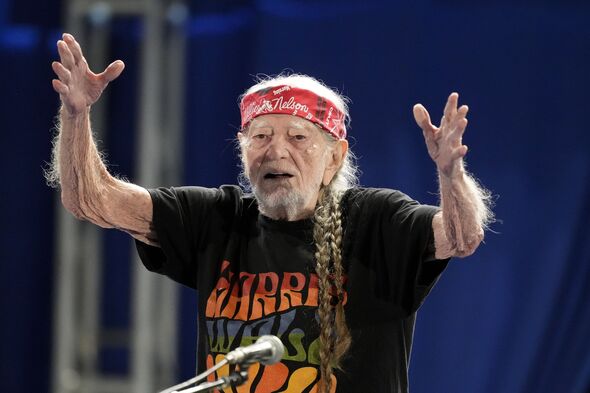
Willie Nelson age continues to defy expectations in 2025, as the country music legend turns 92 years old while maintaining an active touring schedule that would exhaust performers half his age.
Born on April 29, 1933, in Abbott, Texas, Willie Hugh Nelson has spent over seven decades creating music, breaking boundaries, and building a legacy that extends far beyond his chart-topping hits like “On the Road Again” and “Always on My Mind.”
As one of the pioneering figures of outlaw country music, Willie Nelson’s age has never been a barrier to his creativity or productivity. At 92, he continues to release new albums, headline the annual Outlaw Music Festival alongside Bob Dylan, and advocate for causes close to his heart, including farm aid and marijuana legalization.
His remarkable longevity in the music industry makes him a living legend who has outlasted most of his contemporaries while remaining culturally relevant across multiple generations.
Willie Nelson’s journey from a small-town Texas boy picking cotton to becoming a cultural icon worth an estimated $25 million is a testament to his talent, resilience, and unwavering authenticity.
This comprehensive guide explores every facet of the Red Headed Stranger’s extraordinary life, from his business ventures and activism to his 34-year marriage with wife Annie D’Angelo, his secret to longevity, and the famous guitar Trigger that has been his constant companion since 1969.
Business Ventures and Activism
Willie Nelson’s influence extends far beyond music into entrepreneurship and social activism, where he has used his platform and resources to champion causes that matter to him and make a tangible difference in communities across America.
Willie’s Reserve Cannabis Brand
In 2015, Willie Nelson officially entered the cannabis industry by launching Willie’s Reserve, a premium marijuana brand that reflects his longtime advocacy for legalization and his personal use of the plant.
The brand operates in states where marijuana is legal and offers a range of cannabis products, including flower, pre-rolls, vape cartridges, and edibles.
Willie’s Reserve generates approximately $2.3 million annually and represents Willie’s belief that cannabis should be accessible, high-quality, and cultivated responsibly.
The brand partners with small, independent growers who share Willie’s commitment to sustainable farming practices. Each product is carefully tested for quality and potency, ensuring consumers receive a consistent experience.
In 2017, Willie’s wife Annie D’Angelo launched Annie’s Edibles as part of the Willie’s Reserve family, focusing specifically on artisan cannabis-infused chocolates. Annie oversees the edible line personally, ensuring that dosing is accurate and the products meet the highest standards.
Willie has praised his wife’s chocolates, stating, “The thing about edibles is you need to know what you’re getting into. Annie’s chocolates are clean, I trust the dosage and I happen to love them.”
Willie Nelson Biodiesel
Long before green energy became mainstream, Willie Nelson was championing alternative fuels. In 2004, Willie and his wife Annie partnered with Bob and Kelly King to build two Pacific biodiesel plants—one in Salem, Oregon, and another at Carl’s Corner, Texas.
The following year, Willie launched Willie Nelson Biodiesel, commonly known as “Bio-Willie,” a company that markets biodiesel fuel made primarily from vegetable oil, particularly soybean oil.
The fuel can be used in diesel engines without modifications, making it an accessible alternative to traditional petroleum-based diesel. Willie promoted the product extensively, even fueling his own tour buses with Bio-Willie.
While the company faced challenges as the biodiesel market evolved, Willie’s early commitment to renewable energy demonstrated his forward-thinking approach to environmental issues and his willingness to put his money where his beliefs lie.
Pedernales Golf Club
In the Texas Hill Country, just minutes from Willie’s ranch in Spicewood, sits the Pedernales Country Club—a nine-hole golf course that Willie owns and operates.
The club offers a relaxed, unpretentious atmosphere that reflects Willie’s personality, with reasonable green fees and a welcoming environment for golfers of all skill levels.
The golf club generates additional income through memberships and green fees, adding to Willie’s diversified business portfolio.
True to form, Willie can occasionally be spotted playing a round or hosting friends at the club, making it a destination for fans hoping to catch a glimpse of the legend in his natural habitat.
Farm Aid Co-Founder
Perhaps Willie Nelson’s most enduring activism achievement is Farm Aid, the annual benefit concert he co-founded with fellow musicians Neil Young and John Mellencamp in 1985. The organization was created to raise awareness about the struggles of family farmers in America and to provide them with financial assistance and resources.
The first Farm Aid concert took place on September 22, 1985, in Champaign, Illinois, raising over $9 million for American farmers. Nearly 40 years later, Farm Aid continues as an annual tradition, rotating to different farm-adjacent cities each year. The 2025 edition will mark the 40th anniversary of the foundation, taking place in Minneapolis with Willie headlining as he has every single year.
Farm Aid has raised over $60 million to date and has provided grants to hundreds of organizations that support family farms, promote sustainable agriculture, and advocate for fair farm policies. Willie’s commitment to performing at every Farm Aid concert for four decades demonstrates his genuine dedication to the cause and his connection to his agricultural roots.
Marijuana Legalization Advocacy
Willie Nelson has been one of the most vocal and visible advocates for marijuana legalization long before it became socially acceptable or politically popular. He serves as the co-chair of the advisory board of the National Organization for the Reform of Marijuana Laws (NORML), lending his celebrity and credibility to the movement.
Nelson has been arrested multiple times for marijuana possession throughout his career, yet he has never wavered in his advocacy. He argues that cannabis is a safer alternative to alcohol, has legitimate medical benefits, and that criminalization disproportionately harms minority communities. His openness about his personal cannabis use—which he claims helps with his health and creativity—has helped normalize the conversation around marijuana in mainstream American culture.
As states increasingly legalize cannabis for medical and recreational use, Willie’s decades of advocacy have proven prescient. His Willie’s Reserve brand represents the culmination of his activism, allowing him to participate in the legal cannabis industry he helped create.
Environmental Causes
Beyond biodiesel, Willie has supported various environmental causes throughout his career. He has advocated for renewable energy, sustainable agriculture, and conservation efforts. His ranches in Texas serve as examples of responsible land stewardship, including his 700-acre “Luck Ranch,” where Willie rescues horses from slaughterhouses and allows them to roam freely.
Willie’s environmental activism is rooted in his Texas upbringing and his belief in leaving the land better than he found it. Whether through business ventures like Bio-Willie or through his support of organizations fighting climate change, Willie has consistently used his platform to promote environmental responsibility.
Awards, Honors and Legacy
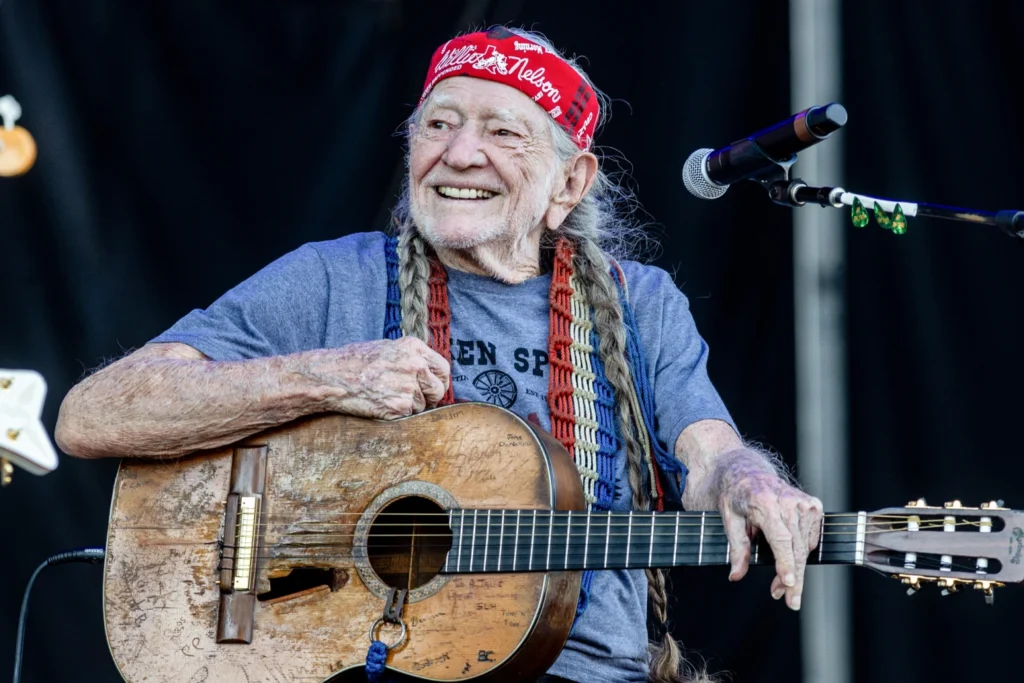
12 Grammy Awards
Willie Nelson has won 12 Grammy Awards from an impressive 57 nominations throughout his career, cementing his status as one of the most respected artists in music history. His first Grammy came in 1975 for Best Male Country Vocal Performance for “Blue Eyes Crying in the Rain,” the breakthrough hit from his landmark album “Red Headed Stranger.”
His most recent Grammy wins came in 2023 at age 89, when he won Best Country Album for “A Beautiful Time” and Best Country Solo Performance for “Live Forever”—proving that Willie’s artistry continues to resonate with voters and audiences alike. These late-career victories demonstrate that Willie Nelson age is irrelevant when it comes to creating meaningful, quality music.
Other notable Grammy wins include Best Country Vocal Performance by a Duo or Group for “Mammas Don’t Let Your Babies Grow Up to Be Cowboys” with Waylon Jennings (1978), Best Country Song for “On the Road Again” (1980), and Best Pop Vocal Album for “Stardust” (1979). His ability to win Grammys across multiple genres—country, pop, and Americana—showcases his versatility as an artist.
Country Music Hall of Fame (1993)
In 1993, Willie Nelson was inducted into the Country Music Hall of Fame, one of the highest honors in country music. The induction recognized his profound impact on the genre, from his innovative songwriting in the 1960s when he penned hits for other artists to his revolutionary role in the outlaw country movement of the 1970s.
Willie’s induction came at age 60, but his career was far from over. In the three decades since his Hall of Fame induction, he has released over 50 additional albums, proving that recognition from the establishment wouldn’t slow him down or cause him to rest on his laurels.
Kennedy Center Honors (1998)
The Kennedy Center Honors, presented annually to individuals who have made extraordinary contributions to American culture through the performing arts, recognized Willie Nelson in 1998. At the ceremony in Washington, D.C., Willie was celebrated alongside fellow honorees Bill Cosby, Fred Ebb, John Kander, and Shirley Temple Black.
The Kennedy Center Honors represents recognition beyond the country music world, acknowledging Willie’s impact on American culture as a whole. His distinctive voice, narrative songwriting, and boundary-breaking career have made him a national treasure whose influence extends across all genres and generations.
Gershwin Prize (2015)
In 2015, Willie Nelson received the Library of Congress Gershwin Prize for Popular Song, an award that recognizes a living musical artist’s lifetime achievement in promoting the genre of song as a vehicle for cultural understanding, entertaining and informing audiences, and inspiring new generations. Previous recipients include Paul Simon, Stevie Wonder, Paul McCartney, and Carole King.
The Gershwin Prize honors Willie’s exceptional songwriting abilities—he has written hundreds of songs, many of which have become standards recorded by countless artists across all genres. Songs like “Crazy” (famously recorded by Patsy Cline), “Hello Walls” (recorded by Faron Young), “Funny How Time Slips Away,” and “Night Life” demonstrate Willie’s gift for crafting timeless melodies and lyrics that resonate universally.
Cultural Impact and Influence
Willie Nelson’s cultural impact extends far beyond awards and accolades. He fundamentally changed country music by rejecting the polished Nashville sound and embracing a raw, authentic style that spoke to real people’s experiences. The outlaw country movement he pioneered alongside Waylon Jennings, Johnny Cash, and Kris Kristofferson gave artists creative control and freedom from the constraints of Nashville’s production machine.
His influence can be heard in countless contemporary country, Americana, and rock artists who cite Willie as an inspiration. Musicians as diverse as Sturgill Simpson, Chris Stapleton, Kacey Musgraves, and even indie rockers have acknowledged Willie’s impact on their work. His willingness to collaborate across genres—from jazz legends like Wynton Marsalis to rapper Snoop Dogg—has made him a bridge between musical worlds.
Willie’s distinctive visual image—long hair, braids, bandana, worn jeans—became iconic and challenged country music’s conservative aesthetic. His refusal to conform, whether in his music, appearance, or lifestyle choices, gave permission to generations of artists to be authentically themselves.
Willie Nelson Lifetime Achievement Award
Willie has received numerous lifetime achievement awards from various organizations, including a Grammy Lifetime Achievement Award (2000), the Johnny Cash Visionary Award from Country Music Television (2012), and the Billboard Icon Award (2012). These honors recognize not just his musical achievements but his broader cultural significance and his role as a living legend who continues to inspire and create.
Recent Years and Current Activities (2020-2025)
COVID-19 Battle in 2022
In May 2022, Willie Nelson contracted COVID-19 at age 89, resulting in one of the most frightening health crises of his life. His wife Annie D’Angelo transformed their home into a hospital, with nebulizers, Paxlovid, monoclonal antibodies, and round-the-clock monitoring. “There were a couple of times when I wasn’t sure he was going to make it,” Annie later revealed.
Willie’s recovery took weeks, and the experience highlighted his mortality in a way that even decades of hard living hadn’t. Annie became fiercely protective, implementing strict testing and masking protocols for anyone who wanted to be around Willie. “A virus doesn’t care who you are, what you believe, or how famous you are,” Annie said, taking on the role of “bad guy” to ensure Willie’s safety.
The COVID-19 battle forced Willie to cancel several tour dates in 2022, disappointing fans but demonstrating the seriousness of the illness. Willie eventually recovered, but the experience served as a reminder that even the seemingly indestructible Willie Nelson age was beginning to catch up with him—though he’d never admit it.
Recent Health Scares and Cancellations
Beyond COVID-19, Willie has faced other health challenges in recent years. In 2019, he cancelled several tour dates due to a breathing problem related to high altitude. In 2023, during the early dates of the Outlaw Music Festival, Willie was forced to miss shows, with his son Lukas Nelson stepping in to perform his father’s songs. These cancellations sparked concern among fans and the inevitable flood of death rumors that Willie has dealt with for years.
Willie addressed the death rumors with characteristic humor in 2017 when he released a song titled “Still Not Dead,” singing, “Still Not Dead—I’m still not dead / I woke up again this morning / I guess them guys were wrong / Still got some livin’ to do.” The song became an anthem for Willie’s refusal to slow down despite repeated predictions of his demise.
In 2025, Willie continues to deal with occasional health issues that come with being 92 years old, but he has stated repeatedly that he has no plans to retire. “The only way I’d stop performing is if I lost Trigger,” Willie said, referring to his beloved guitar, making it clear that as long as he can hold his guitar, he’ll keep playing.
77th Studio Album Release
Willie Nelson released his 77th studio album, “Oh What a Beautiful World,” in 2025—an entire album dedicated to songs written by his late friend Rodney Crowell. The album showcases Willie’s continued artistic vitality and his love for his friends’ music. He has long performed Crowell’s “Til I Gain Control Again,” calling it “one of the best country songs I think I’ve ever heard.”
The album is also significant as it comes on the 50th anniversary of “Red Headed Stranger” (1975), the album that many consider Willie’s masterpiece and the work that catapulted him from respected journeyman to beloved superstar at age 42. This anniversary serves as a reminder that Willie was a relatively late bloomer by music industry standards, not achieving mainstream success until his forties—and then sustaining it for another five decades.
Willie has announced that he’s already working on album number 78, though he’s keeping the direction under wraps. His prolific output shows no signs of slowing, with Willie treating recording sessions as a normal part of his routine rather than major production events.
Outlaw Music Festival Tours
The Outlaw Music Festival, which Willie headlines annually, celebrated its 10th anniversary in 2025. The summer tour, which runs from May through September, includes 35 stops across 22 states and features an all-star lineup including Bob Dylan, Billy Strings, Nathaniel Rateliff & The Night Sweats, Sheryl Crow, Wilco, and many others.
Willie and Bob Dylan, friends since the early 1970s, continue to share stages and trade songs. In 1993, they co-wrote “Heartland” for Willie’s album “Across the Borderline,” and they’ve performed together countless times since. The Outlaw Festival represents Willie’s vision of bringing together artists who share his independent spirit and commitment to authentic music.
Tour stops include major venues like Pine Knob Music Theatre in Clarkston, Michigan (June 20), and performances continue through September 19. Despite his age, Willie performs a full set each night, typically lasting about an hour, and refuses to use set lists—keeping his band members on their toes as he decides which songs to play based on the crowd’s energy.
92nd Birthday Celebrations
Willie celebrated his 92nd birthday on April 29, 2025 (and April 30, since his birth was incorrectly recorded and he celebrates both days). The milestone was marked by fan celebrations worldwide, special broadcasts of his music, and tributes from fellow artists. Willie’s continued presence at 92 makes him one of the oldest actively touring musicians in the world.
For his birthday, Willie posted on social media responding to the latest round of AI-generated death rumors with photos of himself lounging in a robe, captioned “If you believe those AI death stories one more time…” His sense of humor about mortality and the constant death hoaxes has endeared him to fans who appreciate his refusal to take himself too seriously.
Willie’s birthday celebrations have become annual events for his fanbase, with many fans gathering at his performances or Texas locations to honor the legend. His ability to reach 92 while maintaining an active career has made him an inspiration not just to musicians but to anyone who believes that age should never define what you can accomplish.
Current Tour Schedule
As of late 2026, Willie Nelson’s tour schedule remains robust. In addition to the Outlaw Music Festival, Willie headlines his annual 4th of July Picnic, which returns to Austin, Texas, in 2025 at the Germania Insurance Amphitheater. The lineup includes Bob Dylan, the Avett Brothers, the Mavericks, Asleep at the Wheel, and Tami Neilson, alongside Willie and his Family Band.
“I’m 92 years old and I’ll be there so you have no excuse,” Willie said in a statement about the picnic, demonstrating his commitment to performing despite his advanced age. The 4th of July Picnic has been a Texas tradition since 1973, and Willie has maintained it as an annual event (with only occasional exceptions) for over 50 years.
Willie’s current touring schedule also includes selected solo dates and special performances. While he has reduced the number of shows compared to his younger years—when he might perform 200+ dates annually—he still maintains a schedule that would exhaust most performers in their thirties. His dedication to live performance remains unshakeable.
Willie Nelson’s Secret to Longevity
Daily Routine at 92
Willie Nelson’s daily routine at 92 is surprisingly disciplined for someone known for his laid-back persona. He typically wakes up early, often before dawn, a habit from his farming days in Texas. Despite decades of late-night performances, Willie has maintained an internal clock that gets him up with the sun.
His mornings often include light exercise, meditation, and time with his guitar. Willie practices daily, not to learn new techniques but to maintain his connection with his instrument and keep his fingers nimble. “I play every day, even if it’s just for a few minutes,” Willie has said. “If I don’t play, I feel like something’s missing.”
Willie’s diet has evolved over the years. While he’s not strictly vegetarian, he has reduced his meat consumption and focuses on fresh vegetables, fish, and lighter meals. Annie oversees much of his nutrition, ensuring he eats regularly and maintains his strength for touring. However, Willie still indulges in his favorites—including occasional burgers and his beloved barbecue.
Exercise and Wellness Habits
Contrary to what you might expect, Willie Nelson has maintained certain exercise habits throughout his life. He holds a fifth-degree black belt in the Korean martial art of Gongkwon Yusul and a second-degree black belt in taekwondo. While he no longer practices as intensively as he once did, the discipline and breathing techniques from martial arts have contributed to his longevity.
Willie and Annie swim and bike together at their Maui, Hawaii, home, providing low-impact cardiovascular exercise that keeps Willie active without straining his aging body. These activities, combined with the physical demands of performing—standing, playing guitar, and singing for an hour each night—keep Willie’s body engaged and functioning.
In the early 1980s, Willie famously tried a 10-day cayenne pepper juice cleanse with his friend Merle Haggard. Willie described the experience as “horrible” and it didn’t last. He also went through a phase of running two miles daily in cowboy boots while smoking marijuana with Haggard, demonstrating Willie’s unique approach to health and wellness.
The Role of Music in Health
Willie Nelson has often said that music keeps him alive. The act of performing, creating, and sharing music provides Willie with purpose, joy, and connection—elements that research shows are crucial for longevity and quality of life in older adults. “Music is my medicine,” Willie has said. “It’s what gets me up in the morning and what keeps me going.”
The cognitive demands of remembering hundreds of songs, improvising on stage without set lists, and continuing to write new music keep Willie’s brain active and engaged. Studies show that musicians who continue playing into old age often maintain better cognitive function than non-musicians, potentially explaining Willie’s sharp wit and mental clarity at 92.
Performing also provides Willie with social connection and purpose. The camaraderie with his band members—many of whom are family—and the nightly interaction with audiences gives Willie reasons to stay healthy and active. He’s not performing out of financial necessity but because it’s fundamental to who he is.
Positive Attitude and Humor
Perhaps Willie’s greatest secret to longevity is his attitude. He maintains a positive outlook, doesn’t take himself too seriously, and faces life’s challenges with humor rather than despair. When asked about death and aging, Willie responds with jokes or philosophical musings rather than fear.
“I believe in reincarnation. It’s the only thing that makes sense to me,” Willie told The New Yorker. “But I don’t worry about it. We’re all gonna die, and there’s no use rushing it.” This acceptance of mortality, combined with a determination to live fully in the present, allows Willie to enjoy his life rather than spending his remaining years dreading the inevitable.
Willie’s humor about death rumors—releasing songs like “Still Not Dead” and posting sarcastic social media responses—shows his refusal to let speculation about his mortality dampen his spirits. By laughing at death, Willie takes away its power to intimidate him.
Cannabis Use and Health Benefits
Willie Nelson has been open about his daily cannabis use and credits it as a significant factor in his longevity and well-being. “It’s kept me alive,” Willie has said about marijuana. “I wouldn’t be here without it.” While this might sound like hyperbole, Willie genuinely believes that cannabis has provided him with pain relief, stress reduction, and improved quality of life.
Research has shown that cannabis can help with chronic pain management, reduce inflammation, improve sleep quality, and provide relief from anxiety—all issues that could affect a 92-year-old touring musician. Willie uses cannabis as a medical tool rather than purely for recreation, though he certainly enjoys it.
Willie has also stated that his switch from alcohol and harder substances to primarily using cannabis improved his health dramatically. In his younger years, Willie struggled with alcohol and other substances, but his long-term cannabis use appears to have replaced more harmful habits. “Cannabis is a thousand times safer than alcohol,” Willie has said, advocating for legalization based partially on his personal experience.
The Guitar “Trigger” – Willie’s Faithful Companion
History of the Famous Martin N-20
Trigger, Willie Nelson’s famous Martin N-20 nylon-string classical acoustic guitar, has been his constant companion since 1969—over 56 years. Willie purchased the guitar for $750 after a drunk patron at a Nashville bar stepped on his Baldwin guitar during a performance.
Desperate for a replacement, Willie went to a music store where he found the Martin N-20 with a Baldwin pickup already installed. The combination of the classical guitar’s warm tone and the electric pickup created the unique sound that became Willie’s signature.
The guitar was originally manufactured in 1969 as Martin’s Model N-20, a high-end classical guitar made with Brazilian rosewood back and sides and a Sitka spruce top. The Baldwin pickup installation—unusual for a classical guitar—allowed Willie to amplify his sound without sacrificing the instrument’s natural tonal qualities.
Willie immediately bonded with Trigger, and the guitar has been with him through every performance, recording session, and major life event since. It has traveled millions of miles, been played at thousands of shows, and survived countless close calls—making it one of the most famous guitars in music history.
Why Willie Never Plays Another Guitar
Willie Nelson has stated repeatedly that he will never play another guitar besides Trigger. “When Trigger goes, I’ll quit,” Willie has said, making his retirement contingent on the guitar’s survival rather than his own age or health. This declaration speaks to the profound connection between Willie and his instrument.
Willie describes Trigger as an extension of himself, with the guitar’s worn condition and unique characteristics perfectly matching his style and technique. “My battered old Martin guitar, Trigger, has the greatest tone I’ve ever heard from a guitar,” Willie wrote in his book “The Tao of Willie: A Guide to Happiness in Your Heart.” “If I picked up the finest guitar made this year and tried to play my solos exactly the way you heard them on the radio or even at last night’s show, I’d always be a copy of myself and we’d all end up bored.”
The guitar has been modified and repaired countless times over the decades. Willie’s guitar tech, Mark Erlewine, has performed extensive work to keep Trigger playable, including replacing the bridge, frets, and tuning machines. The guitar’s top has a massive hole worn through the wood from Willie’s pick striking the same spot millions of times—a visible testament to Willie’s consistency and dedication to his craft.
Trigger’s Signature Worn Look
Trigger’s appearance is instantly recognizable—a battered, scarred guitar with a giant hole worn through the top near the sound hole, covered with signatures from countless musicians, celebrities, lawyers, and friends who have crossed paths with Willie over the decades. The signatures include legends like Leon Russell, Kris Kristofferson, Johnny Cash, and hundreds of others.
Willie has had the top autographed by people who have influenced him or shared significant moments in his life. These signatures have become part of Trigger’s identity, transforming the guitar from a musical instrument into a living document of Willie’s career and relationships. The signed guitar serves as a physical manifestation of Willie’s collaborative spirit and his connections across the music industry.
Trigger is now estimated to be worth between $800,000 and $900,000—not bad for a guitar purchased for $750. However, Willie has made it clear that Trigger is priceless to him and will never be sold. When Willie eventually passes away, Trigger will likely end up in a museum, serving as a testament to one of music’s greatest partnerships between an artist and his instrument.
The guitar’s worn condition actually enhances its sound, according to Willie. The wood has aged and resonated for over 56 years, creating tonal characteristics that a new guitar could never replicate. The hole in the top, rather than ruining the guitar, has become part of its unique voice. Willie and Trigger have literally worn each other in, creating a symbiotic relationship that defines Willie’s musical identity.
Willie Nelson’s Cultural Impact
Pioneering Outlaw Country Movement
Willie Nelson’s most significant cultural contribution was his role in pioneering the outlaw country movement in the 1970s. Frustrated with Nashville’s restrictive production style—the “Nashville Sound” that emphasized polished, pop-oriented arrangements—Willie and fellow artists like Waylon Jennings, Kris Kristofferson, and Johnny Cash rebelled by taking creative control of their music.
The movement was called “outlaw” because these artists refused to follow Nashville’s rules. They grew their hair long, wore jeans instead of rhinestone suits, wrote their own songs, produced their own records, and played music that was raw, authentic, and personal. Willie’s 1973 album “Shotgun Willie” and his 1975 masterpiece “Red Headed Stranger” exemplified this approach—sparse, honest, and emotionally direct rather than heavily produced.
The outlaw movement fundamentally changed country music by proving that artists could be commercially successful while maintaining creative control. It paved the way for every subsequent generation of country musicians who wanted to make music on their own terms. Without Willie Nelson and the outlaws, modern country music would look very different.
Influence on Modern Country Artists
Willie’s influence on contemporary country and Americana artists is immeasurable. Musicians as diverse as Sturgill Simpson, Chris Stapleton, Kacey Musgraves, Jason Isbell, Tyler Childers, and countless others cite Willie as a primary influence. His willingness to blend genres, write from personal experience, and refuse to compromise his artistic vision gave permission to generations of artists to be themselves.
His sons Lukas Nelson and Micah Nelson (who performs as Particle Kid) have carried on his legacy, becoming successful musicians in their own right. Lukas leads the band Lukas Nelson & Promise of the Real, which has backed Neil Young and appeared in the film “A Star Is Born.” The Nelson family represents a musical dynasty that continues to shape American music.
Cross-Genre Appeal
Unlike many country artists who remain within genre boundaries, Willie has collaborated across musical styles throughout his career. He recorded the jazz standard album “Stardust” (1978), which became one of his biggest commercial successes. He’s worked with jazz legends like Wynton Marsalis, recorded with rapper Snoop Dogg (including the collaboration “My Medicine”), and performed with rock artists ranging from Neil Young to Dave Matthews.
This cross-genre appeal has made Willie a unifying figure in American music—someone who transcends the divisions between country, rock, jazz, folk, and pop. His distinctive voice and guitar style are instantly recognizable regardless of the musical context, allowing him to move fluidly between genres while maintaining his identity.
American Icon Status
Willie Nelson has transcended music to become an American icon—a symbol of Texas, authenticity, independence, and the American spirit. His image is as recognizable as his music: the long braids, the bandana, the worn jeans, and Trigger slung over his shoulder. He represents a particular strain of American individualism that appeals across political and cultural divides.
Politicians from both parties seek Willie’s endorsement or association. His annual Farm Aid concert brings together Americans concerned about agriculture regardless of their other political beliefs. His advocacy for marijuana legalization has made him a hero to cannabis advocates. His environmental work appeals to progressives, while his Texas roots and musical traditionalism resonate with conservatives. Willie somehow manages to be beloved by everyone—a rare feat in polarized modern America.
Political and Social Influence
Willie’s political and social influence extends beyond his music. He has campaigned for presidential candidates (primarily Democrats, including Dennis Kucinich and Barack Obama), but he’s also maintained friendships with Republicans and independents. His activism focuses on specific issues—farm aid, marijuana legalization, environmental protection—rather than partisan politics.
His advocacy has contributed to real policy changes, particularly regarding marijuana legalization. As more states have legalized cannabis, Willie’s decades of outspoken support have been vindicated. He has helped normalize conversations about cannabis use and challenged stigmas surrounding marijuana consumers.
Willie’s influence also extends to how Americans view aging. By continuing to tour, record, and create at 92, Willie challenges stereotypes about what older people can accomplish. He proves that creativity, productivity, and cultural relevance need not diminish with age—a powerful message in a youth-obsessed culture.
Frequently Asked Questions (FAQs)
How old is Willie Nelson in 2026?
Willie Nelson is 92 years old in 2026, having been born on April 29, 1933. Despite his advanced age, he continues to tour extensively, release new albums, and maintain an active presence in the music industry. Willie is one of the oldest actively performing musicians in the world, and he shows no signs of retiring anytime soon.
What is Willie Nelson’s real birth date?
Willie Nelson was actually born on April 29, 1933, but his birth was incorrectly recorded by the attending doctor as April 30. Because of this clerical error, Willie celebrates two birthdays—April 29 and April 30. He was born close to midnight, which likely contributed to the confusion about his exact birth date and the county clerk’s mistaken record.
Is Willie Nelson still performing?
Yes, Willie Nelson continues to perform actively in 2026 at age 92. He headlines the Outlaw Music Festival tour each summer, performs at his annual 4th of July Picnic, and maintains a touring schedule that includes 40-50 shows per year. While he has reduced his touring compared to his younger years when he performed 200+ dates annually, Willie remains committed to live performance and has stated he’ll only stop if something happens to his guitar, Trigger.
Who is Willie Nelson’s current wife?
Willie Nelson’s current wife is Annie D’Angelo, whom he married on September 16, 1991. Annie is 68 years old (born August 27, 1956), making her 23 years younger than Willie. She worked as a makeup artist in Hollywood before meeting Willie on the set of the 1986 film “Stagecoach.” Annie and Willie have been married for 34 years, making this Willie’s longest and most successful marriage by far.
How many times has Willie Nelson been married?
Willie Nelson has been married four times. His first marriage was to Martha Matthews (1952-1962), his second to Shirley Collie (1963-1971), his third to Connie Koepke (1971-1988), and his current marriage to Annie D’Angelo began in 1991. Willie has joked about his previous failed marriages, crediting his divorces with teaching him valuable lessons. His marriage to Annie has lasted over three decades and appears to be the successful partnership he needed.
What is Willie Nelson’s net worth?
Willie Nelson’s net worth is estimated at $25 million in 2026, according to Celebrity Net Worth. While this may seem modest for an artist of his stature, Willie faced significant financial setbacks in 1990 when the IRS claimed he owed $32 million in back taxes and seized most of his assets. He paid off the debt through album sales (including “The IRS Tapes: Who’ll Buy My Memories?”) and property auctions. His current wealth comes from music royalties, touring revenue, business ventures like Willie’s Reserve cannabis brand, and real estate holdings.
How many children does Willie Nelson have?
Willie Nelson has eight children from his various relationships and marriages. With his first wife Martha Matthews, he had three children: Lana, Susie, and Willie “Billy” Hugh Jr. (who died by suicide in 1991). With Connie Koepke, he had two daughters: Paula Carlene and Amy Lee. With his current wife Annie D’Angelo, he has two sons: Lukas Autry (born 1988) and Jacob Micah (born 1990). In 2012, Willie also discovered he had fathered a daughter, Renee, with his friend Mary Haney, though Renee passed away in 2017.
Conclusion
Willie Nelson age, at 91 years old in 2026, stands as a testament to an extraordinary life dedicated to music, activism, and authenticity. Born on April 29, 1933, in Abbott, Texas, Willie Nelson has transcended the role of country music legend to become an American cultural icon whose influence spans generations and genres.
From his humble beginnings in Depression-era Texas to building an estimated net worth of $25-30 million, Willie Nelson’s career journey represents the quintessential American success story.
His seven decades in the music industry have produced timeless classics like “On the Road Again,” “Always on My Mind,” and “Blue Eyes Crying in the Rain,” while his outlaw country movement revolutionized the genre and inspired countless artists who followed.
Willie Nelson’s personal life, including his enduring marriage to Annie D’Angelo since 1991 and his role as father to seven children, reveals a man who values family despite the demands of a legendary career. His four marriages, while sometimes tumultuous, have shaped the man behind the music, with Annie providing the stability and partnership that has supported him through his later years.
At 91, Willie Nelson shows no signs of slowing down. His continued touring schedule, recent album releases, and unwavering commitment to causes like Farm Aid and marijuana legalization demonstrate that age is merely a number for this tireless performer. His longevity in an industry known for burning out young talents speaks to his discipline, passion, and genuine love for connecting with audiences.