
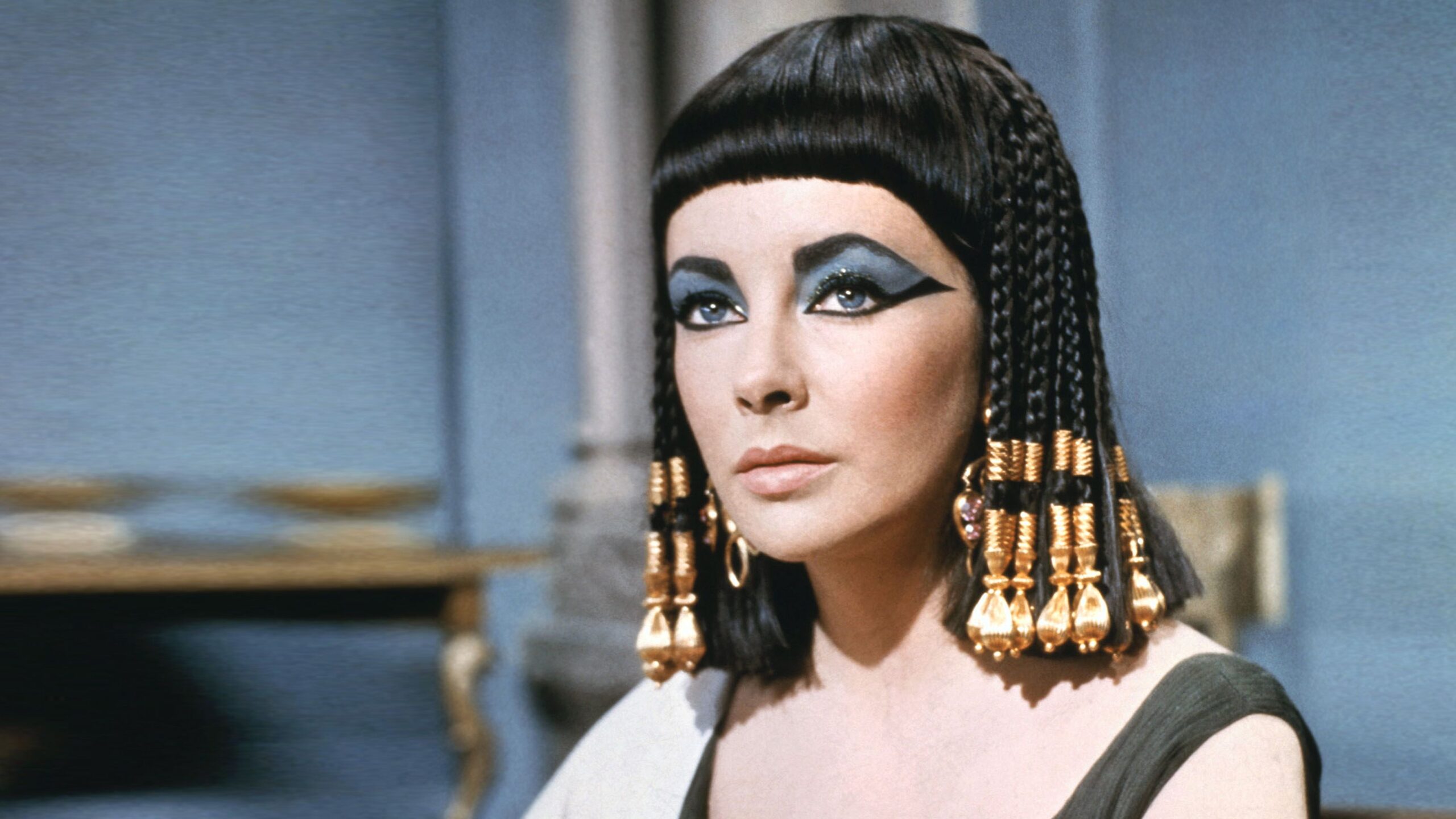
What did ancient Egyptians look like is a question that has fascinated historians, archaeologists, and curious minds for centuries.
Through modern DNA analysis, facial reconstructions, and ancient artwork, we now have clearer answers than ever before.
Ancient Egyptians displayed diverse physical features including light brown to dark brown skin, dark eyes, and black hair.
Their appearance varied across different regions along the Nile River, from Lower Egypt in the north to Upper Egypt in the south.
Recent scientific breakthroughs using mummy DNA and forensic reconstruction have revealed faces that would look familiar in modern Mediterranean and Middle Eastern populations.
Table of Contents
Quick Facts About Ancient Egyptian Appearance
| Attribute | Details |
|---|---|
| Skin Tone | Light brown to dark brown (reddish-brown in art) |
| Hair Color | Black to dark brown |
| Eye Color | Dark brown to brown |
| Height (Men) | 5’5″ to 5’7″ (165-170 cm average) |
| Height (Women) | 5’0″ to 5’3″ (152-160 cm average) |
| Facial Features | Mediterranean to Middle Eastern characteristics |
| Genetic Ancestry | Indigenous Nile Valley, Near Eastern, North African |
| Regional Variation | Northern Egyptians lighter, Southern darker |
| Time Period Studied | 3100 BCE to 450 CE (over 3,500 years) |
| DNA Closest To | Modern Levantine, Mediterranean populations |
Understanding Ancient Egyptian Diversity
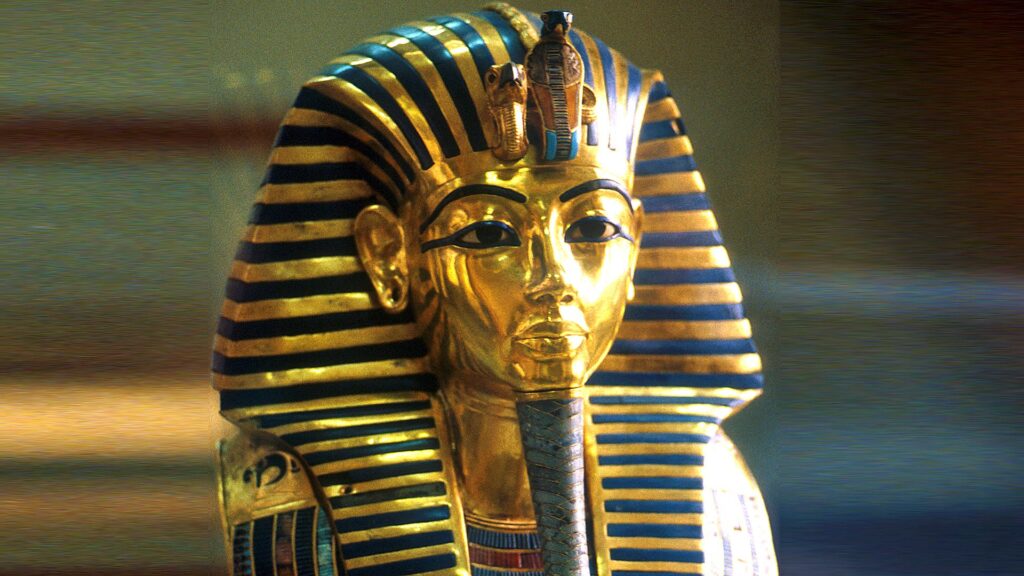
Ancient Egypt was not a monolithic society with one appearance. The civilization spanned over 3,000 years, during which diverse populations mixed and intermingled.
The Nile River attracted people from across North Africa and the Middle East. This created natural diversity in physical appearance throughout Egyptian history.
Modern scholars agree that ancient Egyptians cannot be classified as solely “black” or “white.” They were simply Egyptian, with their own unique ethnic identity.
What DNA Studies Reveal
Recent DNA analysis has revolutionized our understanding of ancient Egyptian appearance. Scientists successfully sequenced ancient mummy genomes in 2017 and later years.
The groundbreaking 2017 study analyzed 151 mummies from Abusir el-Meleq. These mummies dated from 1380 BCE to 450 CE, spanning nearly 2,000 years.
DNA results showed ancient Egyptians shared more ancestry with Near Eastern populations. They were genetically closer to modern Levantine, Mediterranean, and Anatolian people than to modern Egyptians.
Modern Egyptians have increased Sub-Saharan African ancestry compared to ancient populations. This genetic change occurred over the past 1,500 years through migration and mixing.
Facial Reconstruction Technology
Modern forensic technology has brought ancient Egyptian faces back to life. Scientists use DNA phenotyping to predict physical features from genetic markers.
Parabon NanoLabs created stunning 3D reconstructions of three ancient Egyptian men. The reconstructions showed their likely appearance at age 25.
The process uses single nucleotide polymorphisms (SNPs) from ancient DNA samples. These genetic markers code for specific physical traits like skin color and facial structure.
Forensic artists then create detailed facial models based on DNA predictions. The results are remarkably realistic portraits of people who lived millennia ago.
Physical Features From Reconstructions
The DNA-based facial reconstructions revealed consistent characteristics. All three reconstructed men had light brown skin tones.
Their hair was predicted to be dark brown to black. Eyes were dark brown, matching historical Egyptian artwork.
Facial features showed Mediterranean and Middle Eastern characteristics. Bone structure aligned with modern populations from the Levant region.
The men had no freckles and typical masculine facial proportions. Their appearance would not seem out of place in modern Lebanon, Syria, or Jordan.
How Ancient Egyptians Depicted Themselves
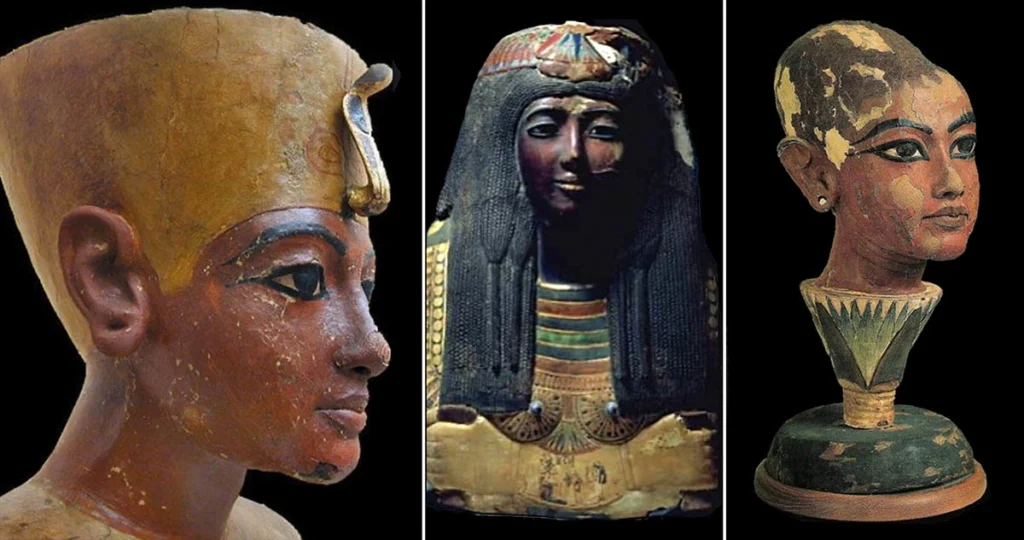
Ancient Egyptian art provides valuable clues about their appearance. However, artistic conventions followed strict stylistic rules rather than photographic realism.
Egyptians painted themselves with reddish-brown skin in their artwork. This color distinguished them from both darker-skinned Nubians and lighter-skinned Libyans.
Men were typically shown darker than women in paintings. This reflected gender roles: men worked outdoors while women stayed inside.
The color difference was symbolic rather than literal. Both genders had similar actual skin tones, despite artistic conventions.
Evidence From Ancient Artwork
Egyptian tomb paintings and reliefs show distinct depictions of different peoples. These images reveal how Egyptians saw themselves compared to neighbors.
Libyans were painted with lighter skin and often blonde or reddish hair. Nubians appeared with very dark skin and African features.
Asiatic peoples from the Levant had beards and different clothing. Egyptians placed themselves between these extremes in coloration.
This artistic tradition remained consistent for thousands of years. It demonstrates Egyptians had a clear sense of their own ethnic identity.
The Fayum Mummy Portraits
The Fayum portraits offer the most realistic depictions of ancient Egyptians. These paintings date from the Roman period (1st-3rd centuries CE).
Unlike stylized temple art, Fayum portraits show naturalistic faces. They were painted on wood panels placed over mummified bodies.
The portraits reveal Mediterranean features and varied skin tones. Some appear quite light while others show darker complexions.
These paintings are considered some of the most realistic ancient portraits ever created. They show individuals as they actually appeared in life.
Skin Color Variations
Ancient Egyptian skin tones varied by region and time period. Northern Lower Egypt generally had lighter-skinned populations.
Upper Egypt and Nubian border regions showed darker skin tones. Geographic location along the Nile influenced physical appearance.
Genetic studies confirm this north-south variation existed. Northern mummies show more Mediterranean and Near Eastern ancestry.
Southern populations had increased Sub-Saharan African genetic components. This gradient reflected Egypt’s position between Africa and the Middle East.
Height and Body Structure
Ancient Egyptians were relatively short by modern standards. Men averaged around 5’5″ to 5’7″ tall (165-170 cm).
Women were shorter, averaging 5’0″ to 5’3″ (152-160 cm). These heights are based on skeletal remains from various time periods.
Body structure was generally slender and gracile. Malnutrition and hard labor affected growth in lower classes.
Royal mummies show slightly taller and more robust builds. Better nutrition allowed fuller physical development for the elite.
Facial Features and Bone Structure
Skull analysis reveals Mediterranean and North African facial characteristics. Ancient Egyptians had moderate to narrow facial features.
Noses ranged from straight to slightly aquiline in shape. Jaw structure was typically well-defined but not overly prominent.
Eye sockets suggest deep-set eyes with prominent brow ridges. These features align with modern Mediterranean populations.
Some individuals showed more robust African features. This variation existed throughout Egyptian history in different proportions.
Hair Color and Texture
Ancient Egyptian hair was predominantly black to dark brown. This is confirmed by both mummy remains and DNA analysis.
Hair texture varied from straight to wavy or curly. Truly tightly coiled hair was less common but did exist.
Many mummies show reddish or auburn hair due to chemical processes. The mummification process often altered original hair color.
Egyptians valued elaborate hairstyles and wigs. Both men and women wore artificial hair for formal occasions.
Eye Color Characteristics
Brown eyes were the overwhelming norm in ancient Egypt. DNA studies predict dark brown as the standard eye color.
Lighter brown or hazel eyes occasionally appeared. True blue or green eyes were extremely rare.
Eye color genetics suggest Near Eastern and North African ancestry. The prevalence of dark eyes matches modern populations from similar regions.
Ancient artwork consistently depicts Egyptians with dark eyes. This artistic choice aligned with biological reality.
Regional Differences
Lower Egypt (the Nile Delta) had more Mediterranean influences. Populations here showed closer genetic ties to the Levant.
This northern region benefited from sea trade and migration. Greeks, Phoenicians, and other Mediterranean peoples settled there.
Upper Egypt maintained more indigenous African characteristics. The southern region had stronger connections to Nubia and interior Africa.
Middle Egypt showed blended characteristics between north and south. The Nile facilitated movement and mixing between regions.
The Nubians and Egyptians
Nubians lived south of Egypt in what is now Sudan. They were distinct from Egyptians but closely connected culturally.
Nubians generally had darker skin and more Sub-Saharan African features. Egyptian art clearly distinguished between the two groups.
Despite differences, Egyptians and Nubians intermarried frequently. Some pharaohs had Nubian ancestry, especially in later periods.
The 25th Dynasty was entirely Nubian, ruling Egypt for nearly a century. These pharaohs embraced Egyptian culture while maintaining Nubian identity.
Notable Examples From History
Queen Ahmose-Nefertari is often identified as having darker skin. Contemporary Egyptologist Sigrid Hodel-Hoenes noted her skin color was venerated.
Her dark complexion echoed “the color of fertile earth and death.” This spiritual symbolism made darkness desirable in certain contexts.
Maiherpri was a powerful nobleman during Thutmose IV’s reign. His mummy and artwork show distinctly darker skin than typical depictions.
He may have been Nubian or of Nubian descent. His burial in the Valley of the Kings indicates high status.
King Tutankhamun’s Appearance
Facial reconstructions of King Tut reveal a delicate, youthful face. He had a slightly elongated skull and prominent overbite.
Three independent teams created similar reconstructions in 2005. The consistency confirmed the accuracy of the forensic methods.
Tut’s features align with his Thutmosid family lineage. He appeared as a slender young man with typical Egyptian characteristics.
DNA analysis confirmed he had dark hair and eyes. His skin tone was likely light to medium brown.
The Greco-Roman Period
After Alexander the Great’s conquest in 332 BCE, Greeks settled in Egypt. The Ptolemaic Dynasty ruled for nearly 300 years.
Greek and Egyptian populations mixed, especially in cities. The Fayum portraits show this blending of Mediterranean and Egyptian features.
Roman rule brought additional European genetic influence. However, most of Egypt’s population remained ethnically Egyptian.
The elite classes showed more Greco-Roman characteristics. Common people maintained traditional Egyptian appearance and culture.
Physical Health and Diet
Diet significantly influenced ancient Egyptian appearance and health. Those with access to good nutrition grew taller and stronger.
The typical diet included bread, beer, fish, and vegetables. Meat was less common, mainly consumed by the wealthy.
Dental problems were universal due to sand in bread. Tooth wear and abscesses affected nearly everyone regardless of class.
Malnutrition stunted growth in poorer populations. Skeletal remains show evidence of nutritional deficiencies.
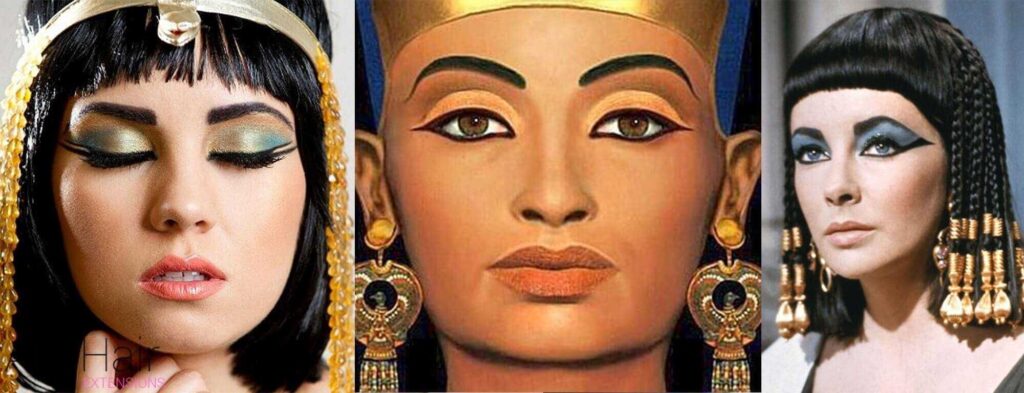
Cosmetics and Beauty Standards
Ancient Egyptians extensively used cosmetics and grooming products. Both men and women wore elaborate eye makeup.
Kohl (black eye liner) was made from galena and lead. Green eye shadow came from malachite mineral.
These cosmetics had practical purposes beyond beauty. They protected eyes from sun glare and infection.
Egyptians also used perfumes, oils, and hair treatments. Personal grooming was highly valued across all social classes.
Gender Differences in Depiction
Egyptian art showed clear gender distinctions in color. Men appeared darker, women lighter in paintings.
This convention reflected social roles rather than actual appearance. Men worked outdoors in the sun while women stayed indoors.
Real skin color differences were minimal between genders. The artistic tradition persisted for symbolic rather than realistic reasons.
Statues sometimes show more realistic coloring. Prince Rahotep and his wife Nofret’s statues demonstrate this color convention.
Social Class and Appearance
Upper-class Egyptians had better nutrition and healthcare. This resulted in taller stature and better physical development.
Wealthy individuals could afford protective clothing and shade. Their skin may have been slightly lighter from less sun exposure.
Lower classes worked in harsh conditions under intense sun. Hard labor and poor nutrition affected their physical appearance.
Skeletal remains clearly show class-based health differences. Royal mummies are generally in better condition than common people.
Climate and Environmental Factors
Egypt’s intense desert sun darkened skin over generations. Prolonged sun exposure affected appearance across the population.
The Nile Valley provided a narrow band of habitable land. Most Egyptians lived in this fertile corridor.
Desert conditions on both sides limited agricultural expansion. Population density along the Nile encouraged mixing.
Climate influenced clothing choices and daily activities. This indirectly affected physical appearance through sun exposure patterns.
Migration and Gene Flow
Egypt’s strategic location encouraged migration from multiple directions. People moved along the Nile from interior Africa.
Mediterranean peoples arrived by sea from the north. Asiatic groups crossed from the Levant in the east.
These migrations occurred continuously over thousands of years. Gene flow gradually altered Egyptian genetic composition.
Trade routes facilitated peaceful population mixing. Conquest and warfare also brought foreign populations.
The 2017 DNA Study Breakthrough
The Max Planck Institute study was groundbreaking for ancient Egyptian genetics. Scientists extracted DNA from 151 mummies successfully.
Previous attempts had failed due to degradation and contamination. Hot climate and mummification chemicals damaged DNA preservation.
The study confirmed ancient Egyptians shared ancestry with Near Easterners. They were genetically distinct from modern Sub-Saharan Africans.
This settled some debates but sparked new controversies. The findings challenged both Afrocentric and Eurocentric historical narratives.
Modern Egyptian Genetics
Modern Egyptians show increased Sub-Saharan African ancestry. This genetic shift occurred primarily in the past 1,500 years.
The Arab conquests and slave trade introduced new genetic components. Trans-Saharan trade routes brought people from deeper Africa.
Despite changes, continuity exists between ancient and modern populations. Modern Egyptians are descendants of ancient Egyptians with additional admixture.
Geographic patterns persist with southern Egyptians showing more African ancestry. Northern populations remain closer to Mediterranean and Levantine groups.
Controversies and Debates
The question of ancient Egyptian appearance has political dimensions. Different groups claim Egyptian heritage for ideological purposes.
Afrocentric scholars argue Egyptians were black Africans. They cite ancient descriptions and emphasize African location.
Eurocentric narratives historically portrayed Egyptians as Mediterranean whites. This served colonial ideologies about African capabilities.
Modern mainstream scholarship rejects both extremes. Egyptians were indigenous Nile Valley people with diverse influences.
Ancient Descriptions
Greek historian Herodotus described Egyptians in the 5th century BCE. His accounts provide outsider perspectives on Egyptian appearance.
Herodotus mentioned Egyptians had “black skin and woolly hair.” However, his descriptions must be understood in Greek color terminology.
Greek color categories differed from modern racial classifications. “Black” could mean dark-tanned rather than Sub-Saharan African.
Ammianus Marcellinus described Egyptians as “mostly brown and black.” This 4th century CE account suggests darker skin tones.
Art and Archaeological Evidence
Statues and paintings show varied representations of Egyptians. Artistic conventions make interpretation challenging.
Relief carvings show detailed facial features. These reveal individual characteristics beyond generic artistic formulas.
Mummy portraits from the Roman period are most realistic. They show clear Mediterranean and Middle Eastern facial features.
Archaeological evidence consistently supports mixed ancestry. No single racial category fits the ancient Egyptian population.
Scientific Methods Used Today
CT scanning allows non-invasive study of mummies. This technology reveals internal structure without damage.
DNA extraction techniques continue improving. Scientists can now sequence highly degraded ancient DNA.
Isotope analysis shows diet and geographic origins. Teeth and bones preserve chemical signatures of early life.
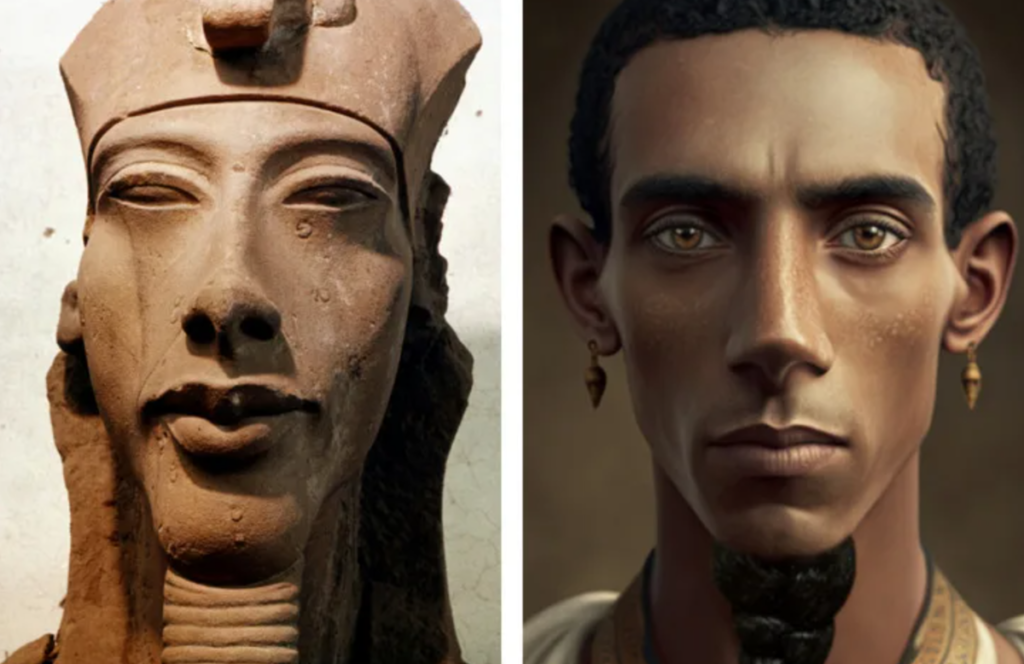
Facial reconstruction combines anatomy, genetics, and artistry. The results provide best estimates of actual appearance.
The Role of Ancient Egyptian Art
Egyptian art followed strict canonical rules. Proportions and colors were symbolic rather than realistic.
The canon specified body ratios and postures. Artists learned these formulas through apprenticeship.
Individual portraits did exist for elite members. Royal statues sometimes showed distinctive personal features.
Understanding artistic conventions is crucial for interpretation. We cannot take Egyptian art as photographic evidence.
Mummy Preservation Effects
Mummification altered physical appearance significantly. Chemicals darkened skin and changed hair color.
Natron salt dessicated tissues, affecting coloration. Resins and oils further altered original appearance.
Hair often turned reddish from chemical reactions. This does not reflect living hair color.
Modern forensic analysis accounts for these changes. Scientists can estimate original features despite preservation effects.
What Skeletal Remains Tell Us
Bones provide hard data about ancient populations. Skeletal measurements reveal height, build, and health.
Skull morphology indicates geographic ancestry. Cranial features link ancient Egyptians to Mediterranean and North African groups.
Bone chemistry reveals diet and diseases. This provides context for understanding physical development.
Wear patterns show occupational stress. Labor-intensive work left distinctive markers on skeletons.
The Importance of Context
Ancient Egypt existed for over 3,000 years. Appearance changed across this immense timespan.
Early Predynastic Egyptians differed from Ptolemaic-era populations. Genetic composition evolved through migration and mixing.
Geographic location within Egypt mattered significantly. Northern and southern populations showed distinct characteristics.
Social class influenced physical development and appearance. Wealth provided better nutrition and healthcare.
Beyond Physical Appearance
Egyptian identity was cultural rather than racial. Language, religion, and loyalty to pharaoh defined “Egyptian-ness.”
Ancient Egyptians did not conceptualize race as moderns do. Skin color carried no inherent social hierarchy.
Foreigners who adopted Egyptian culture could become Egyptian. This cultural flexibility allowed diverse peoples to integrate.
Physical appearance mattered far less than cultural conformity. Egyptian civilization valued actions over ancestry.
Modern Reconstructions Gallery
Multiple mummies have undergone facial reconstruction. Each adds to our understanding of Egyptian appearance.
The Nuwayrat man lived 4,500-4,800 years ago. His reconstruction shows Mediterranean features with dark hair.
Tutankhamun’s multiple reconstructions show consistent results. They reveal his youthful face with family traits.
Three Abusir el-Meleq men show striking realism. Their faces could belong to modern Levantine people.
What This Means for Understanding Egypt
Ancient Egyptians were a distinct Northeast African population. They shared characteristics with both African and Middle Eastern peoples.
Their civilization developed primarily through indigenous innovation. Foreign influences existed but did not define Egyptian culture.
Modern genetic studies show both continuity and change. Ancient and modern Egyptians share deep connections.
Understanding Egyptian appearance helps humanize this ancient civilization. Real faces make history more immediate and relatable.
Why Appearance Questions Matter
Questions about Egyptian appearance reflect modern concerns. Race and identity politics shape how we interpret the past.
Historical accuracy requires evidence-based conclusions. DNA and scientific methods provide clearer answers than ideology.
Recognizing Egyptian diversity challenges simplistic narratives. Neither “black” nor “white” captures their complexity.
Appreciating this nuance enriches historical understanding. Ancient Egypt belongs to all humanity, not one group.
Future Research Directions
DNA technology continues advancing rapidly. Future studies will analyze more mummies with greater precision.
Egypt’s national genome project aims ambitious goals. Sequencing 100,000 modern Egyptians and 200 ancient mummies will provide massive data.
Improved reconstruction techniques will create more accurate faces. Artificial intelligence may enhance prediction accuracy.
Interdisciplinary collaboration will yield deeper insights. Genetics, archaeology, and anthropology together paint fuller pictures.
Frequently Asked Questions (FAQs)
What did ancient Egyptians look like?
Ancient Egyptians had light brown to dark brown skin, dark brown to black hair, and brown eyes. DNA studies and facial reconstructions show they resembled modern Mediterranean and Middle Eastern populations, with features similar to people from Lebanon, Syria, and Jordan today.
Were ancient Egyptians black or white?
Ancient Egyptians were neither “black” nor “white” by modern racial categories. They were a distinct Northeast African population with mixed ancestry from the Nile Valley, Near East, and North Africa, showing regional diversity from lighter northern populations to darker southern ones.
What color skin did ancient Egyptians have?
Ancient Egyptians had skin tones ranging from light brown to dark brown. DNA studies suggest light brown was most common. Egyptian art depicted them with reddish-brown skin, distinguishing themselves from darker Nubians and lighter Libyans.
How tall were ancient Egyptians?
Ancient Egyptian men averaged 5’5″ to 5’7″ (165-170 cm), while women averaged 5’0″ to 5’3″ (152-160 cm). Royal mummies were sometimes taller due to better nutrition, while hard labor and malnutrition affected lower-class height.
Did ancient Egyptians have African features?
Ancient Egyptians showed a mix of features. Northern populations had more Mediterranean characteristics, while southern Egyptians showed more African features. As a Nile Valley population, they blended elements from both regions throughout their 3,000-year history.
How do scientists know what ancient Egyptians looked like?
Scientists use DNA analysis from mummies, facial reconstruction technology, skeletal remains, and ancient artwork. Modern DNA phenotyping predicts features like skin and eye color, while CT scans and forensic methods recreate facial structures from skulls.
Were Nubians and Egyptians the same people?
No, Nubians and Egyptians were distinct groups. Nubians lived south of Egypt (modern Sudan) and generally had darker skin and more Sub-Saharan African features. However, both groups frequently intermarried and shared cultural elements.
What did King Tutankhamun really look like?
Facial reconstructions show Tutankhamun had a delicate face with slightly elongated skull, prominent overbite, dark hair and eyes, and light to medium brown skin. He was slender, stood about 5’6″ tall, and showed characteristics of his Thutmosid family lineage.
Are modern Egyptians descended from ancient Egyptians?
Yes, modern Egyptians are descendants of ancient Egyptians with additional genetic admixture. Modern populations show increased Sub-Saharan African ancestry (from the past 1,500 years) compared to ancient samples, but significant genetic continuity exists.
Why do mummies have reddish hair?
Mummies often appear to have reddish or auburn hair due to chemical changes during mummification. The natron salt, resins, and oils used in preservation altered original hair color. Ancient Egyptians actually had black to dark brown hair in life.
Conclusion
What did ancient Egyptians look like is no longer purely speculative thanks to modern science. DNA analysis, facial reconstruction technology, and careful study of ancient remains have provided clear answers.
Ancient Egyptians were a distinct Northeast African population with predominantly light brown skin, dark hair, and brown eyes, displaying features common in modern Mediterranean and Middle Eastern populations.
Their appearance varied regionally along the Nile, with northern populations showing more Levantine characteristics and southern populations displaying more African features.
The civilization’s 3,000-year span naturally included diversity and change. Migration, conquest, and trade brought new peoples who mixed with indigenous populations.
Yet genetic studies confirm significant continuity throughout Egyptian history, with ancient populations closely related to each other despite temporal distance.
The recent DNA breakthroughs and facial reconstructions have revolutionized our understanding, replacing speculation with scientific evidence.